
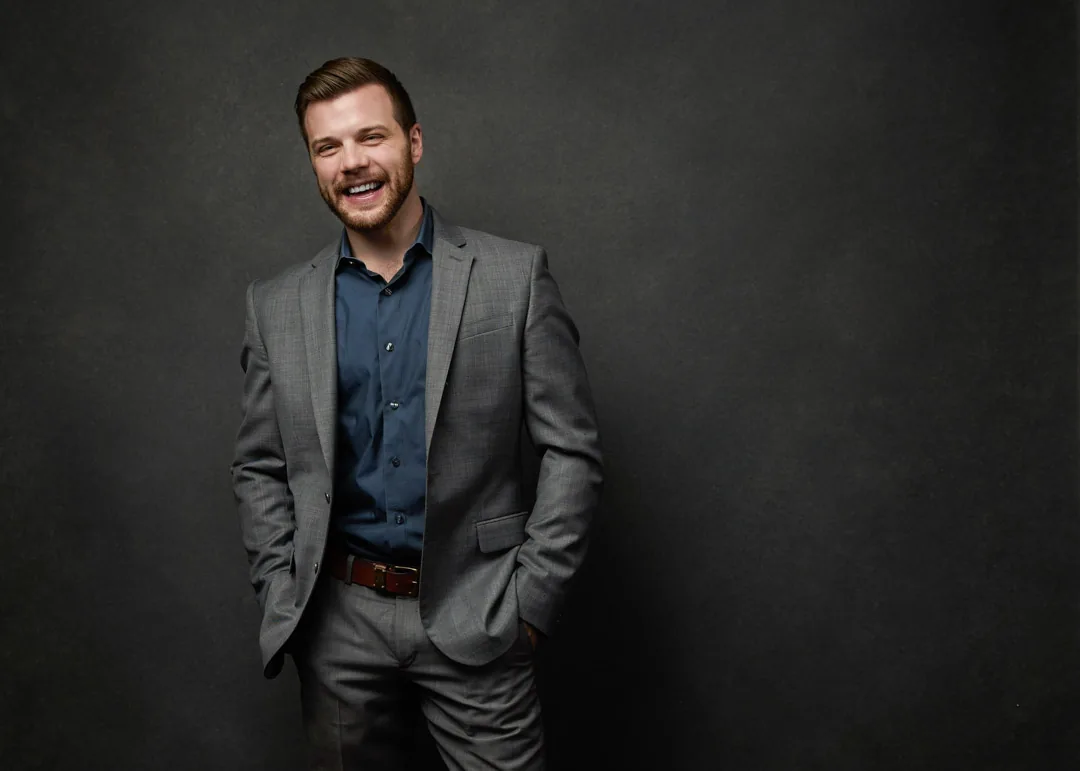
Should you smile in a headshot? Usually yes, but the right smile depends on you, your field, and the moment. Here are five things to know.
Should you smile in a headshot? In most cases, yes. A genuine, relaxed smile makes you look approachable and trustworthy, and that is the exact first impression a headshot exists to create. The catch is that the smile most people picture, the big one they hold on command, is usually the wrong one. The smile that actually works is smaller, truer, and reaches your eyes. This guide walks through five things to know about smiling in a headshot, and just as importantly, when a calm, neutral expression is the better call.
I'm Joshua Albanese, founder and lead photographer at JA Headshots here in Fort Myers. Over 18 years and more than 15,000 professionals photographed, first in Chicago and now across Southwest Florida, the expression question comes up in nearly every session. People sit down and immediately ask whether they should smile. Here is everything I tell them.
1. A genuine smile beats a forced one every single time
The most important thing to know is that the camera can tell the difference between a real smile and a performed one, and so can everyone who looks at your photo. A true smile engages the small muscles around your eyes, not just your mouth. When those eye muscles are relaxed and lifted, the smile reads as warm and believable. When only your lips move, the result looks polite at best and fake at worst.
This is why "just smile" is such useless direction, and why so many people believe they are not photogenic. They are not fighting their face. They are holding a shape that their eyes are not backing up. A smile you hold for four seconds while someone counts down is almost never the smile a friend gets from you in real life.
The mechanism matters because it tells you what to fix. You cannot force your eyes to smile by trying harder. A genuine expression has to be triggered, not manufactured. In a guided session that is my whole job during the moment of capture: I get a real reaction out of you through conversation or a bit of timing, then I catch it in the fraction of a second it is actually there. That is the difference between a headshot that looks like you on a good day and one that looks like you were told to smile.
2. Your industry and platform decide how much to smile
How big your smile should be is not a matter of taste alone. It is set largely by the context the photo will live in, so the second thing to know is to match your expression to your field and your platform. A headshot is a piece of professional signaling, and different rooms expect different signals.
Client-facing and relationship-driven roles reward warmth. If you are in real estate, sales, coaching, hospitality, healthcare, or any field where people choose you partly because they like you, a fuller, teeth-showing smile usually serves you. It says you are open and easy to work with before a word is exchanged.
Authority-first and trust-under-pressure roles often call for restraint. Attorneys, executives, finance professionals, and consultants frequently photograph better with a softer, closed-mouth smile or a composed, confident neutral. The signal there is judgment and steadiness, not friendliness.
Platform shapes it too. A LinkedIn headshot for a business developer can carry more warmth than the same person's photo on a corporate leadership page. When you book a session, tell me where the image will be used, because a headshot built for a recruiter scanning profiles is directed a little differently than one for a law firm's attorney bio. The destination changes the expression I aim for.
3. The soft, closed-mouth smile is the quiet workhorse
If there is one expression that works for the widest range of people and purposes, it is the soft smile, the one that lives between a full grin and a flat neutral. The third thing to know is that this closed-mouth, eyes-engaged look is the safest, most versatile expression in professional photography, and it is the one I return to most often.
A soft smile does two things at once. It keeps the warmth, because the eyes are still lit and the corners of the mouth are still lifted, but it adds composure, because the mouth stays relaxed rather than stretched wide. It reads as confident and grounded without tipping into either stiffness or over-eagerness. For anyone unsure which way to go, this is the default I recommend.
It is also the hardest to fake on your own, which is exactly why it is worth having a photographer direct it. Held cold in a mirror, a closed-mouth smile can look tight or smug. Triggered by a genuine moment and caught at the right instant, it looks like calm self-assurance. During a session I will usually build several of these first, because they tend to be the frames people end up choosing for their primary profile.
4. Teeth or no teeth is a real decision, not a coin flip
One of the most common questions I hear is whether to show teeth, and the fourth thing to know is that both work, but the choice should follow your natural smile and your industry rather than a random guess. This is not a small detail. It changes the entire read of the photo.
A teeth-showing smile broadcasts energy, openness, and approachability. It suits people whose work depends on connection and first-meeting warmth. A closed-mouth smile broadcasts composure and quiet confidence. It suits people whose work depends on being taken seriously and trusted with weight. Neither is more professional than the other. They simply say different things.
The deciding factor is what looks natural on your specific face. If your real, unforced smile shows teeth, clamping your lips shut for the photo will look stiff and unlike you. If your genuine smile is more of a closed, gentle one, forcing a wide grin will look strained. Your face already has a default, and the best headshot honors it rather than overriding it. Because I know most people cannot picture their own options, I shoot both a teeth version and a closed-mouth version in the same session so you can see them side by side and decide with real evidence instead of a hunch.
5. Know when a neutral expression wins, and how to keep it from going flat
The fifth thing to know is when not to smile at all. A calm, non-smiling expression is the right choice for certain people and goals, and done well it is one of the strongest looks in the whole medium. Senior executives, litigators, security and defense professionals, and anyone building an authority-first personal brand often land better with gravity than with warmth.
Here is the part that trips people up. A neutral headshot is not a blank one. The difference between a commanding neutral and a lifeless one is entirely in the eyes. A great non-smiling frame still has present, engaged, lit-up eyes, the look of someone quietly holding your gaze with intent. A poor one has a flat, checked-out stare that reads as bored or uncomfortable.
That distinction is subtle enough that it is the single hardest expression to self-direct, which is why I coach it more carefully than any smile. I keep you engaged and mentally present right up to the shutter, so the stillness in the frame looks deliberate rather than empty. If your role calls for a serious headshot, the goal is composed and confident, never cold and vacant, and getting there reliably takes direction.
The questions I hear most about smiling in a headshot, answered in plain language.
Ready for a headshot where your smile actually looks like you?
You do not need to arrive knowing whether to smile, show teeth, or stay neutral. That is what the session is for. At JA Headshots I run guided studio sessions here in Fort Myers, directing your expression the whole way and shooting several versions so you can choose from real options rather than guessing. Sessions are $500 and include unlimited time in the studio, with retouched images at $150 each. If you are ready to get a headshot that looks like you on your best day, get in touch to book a session and we will figure out the right expression together.
This article was written by Joshua Albanese, founder and lead photographer at JA Headshots in Fort Myers. He founded a top-10 US headshot studio in Chicago, photographed more than 15,000 professionals over 18 years, and relocated to Southwest Florida in 2024. His psychology-driven approach is built for people who are convinced they are not photogenic.
Frequently asked questions
Should you smile in a headshot?
In most cases, yes. A warm, genuine smile makes you look approachable and trustworthy, which is exactly what a headshot is for. The catch is that the smile has to reach your eyes to read as real. A forced, teeth-only smile looks worse than a relaxed neutral face. So the honest answer is smile, but only if it is a true one. If you are in a field like law or finance, a softer, closed-mouth smile or a calm, confident neutral often fits better than a big grin. During a guided session I coach the expression out of you so you never have to hold a fake one.
Is it better to smile with teeth or without in a professional headshot?
Both work, and the right one depends on you and your industry. A teeth-showing smile reads as open, energetic, and friendly, which suits sales, real estate, coaching, and most client-facing roles. A closed-mouth smile reads as composed and quietly confident, which suits executives, attorneys, and finance. The deciding factor is which one looks natural on your face. If your genuine smile shows teeth, forcing your lips shut looks stiff, and the reverse is true too. I usually shoot several of each so you can see them side by side and choose.
Why do my headshot smiles always look fake?
Almost always because the smile is being held on command instead of triggered by something real. When you smile because someone said smile, your mouth moves but your eyes do not, and the camera catches that gap instantly. The fix is not trying harder, it is direction. A good photographer gets a genuine reaction out of you through conversation and timing, then captures it in the split second it is real. That is why a relaxed, guided session produces a natural smile far more reliably than standing there trying to perform one.
When should you not smile in a headshot?
Skip the big smile when your field or your goal calls for gravity rather than warmth. Senior executives, litigators, security and defense professionals, and anyone building an authority-first brand often photograph better with a calm, direct, closed-mouth expression. A neutral look done well is not cold, it is composed and self-assured. The mistake is a flat, blank stare with no life in the eyes. Even a serious headshot needs engaged, present eyes, which is the part I coach hardest when we shoot a non-smiling frame.
Guided studio headshot sessions in Fort Myers, directed start to finish so your smile lands natural instead of forced.
Learn more
Written by
Joshua Albanese
Photographer, JA Headshots
Joshua Albanese founded one of the top-10 rated headshot studios in the United States in Chicago in 2007. Over 18 years he photographed more than 15,000 professionals and produced over 3 million images for clients ranging from Fortune 500 executives to first-year associates. In 2024 he relocated to Fort Myers and opened a dedicated portrait studio at 1325 Canterbury Dr. His psychology-driven approach is built for people who say they aren't photogenic.