
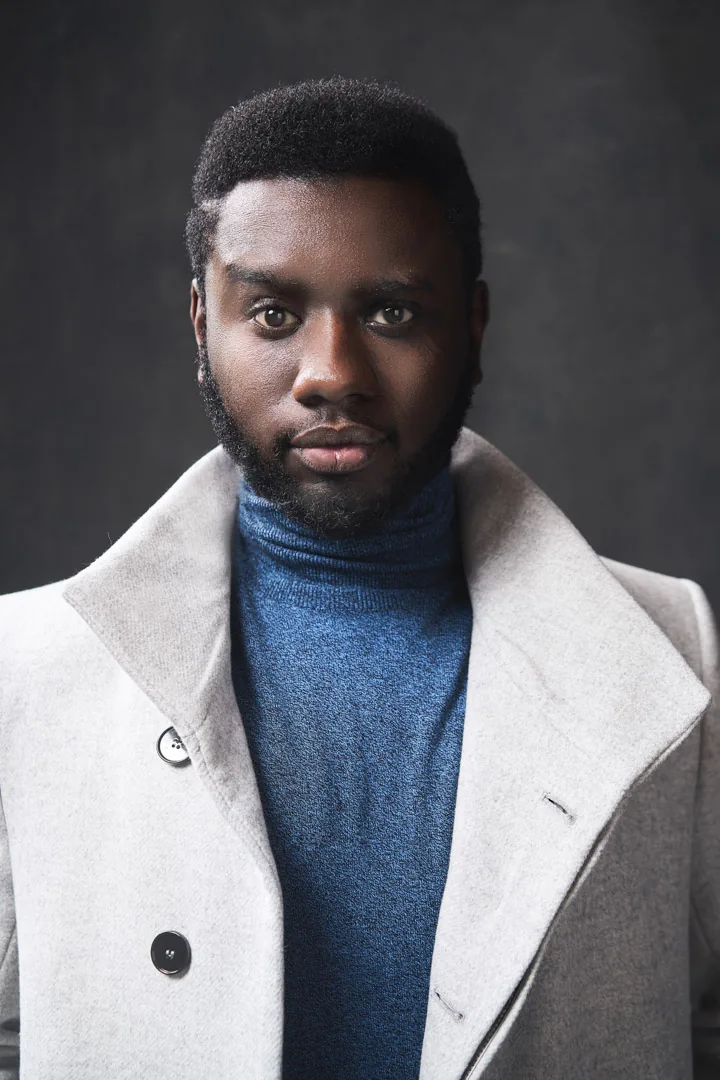
Booked a session and quietly dreading it? Here is how to prepare for a headshot in five simple steps.
Preparing for a headshot comes down to five things you can control: rest, wardrobe, grooming, what you bring, and your mindset walking in. Handle those and the session takes care of itself, even if you are the kind of person who quietly dreads being photographed. If you would rather have the whole thing guided from start to finish, the guided photography services at JA Headshots in Fort Myers are built for exactly that, and this guide walks through each step so you show up ready.
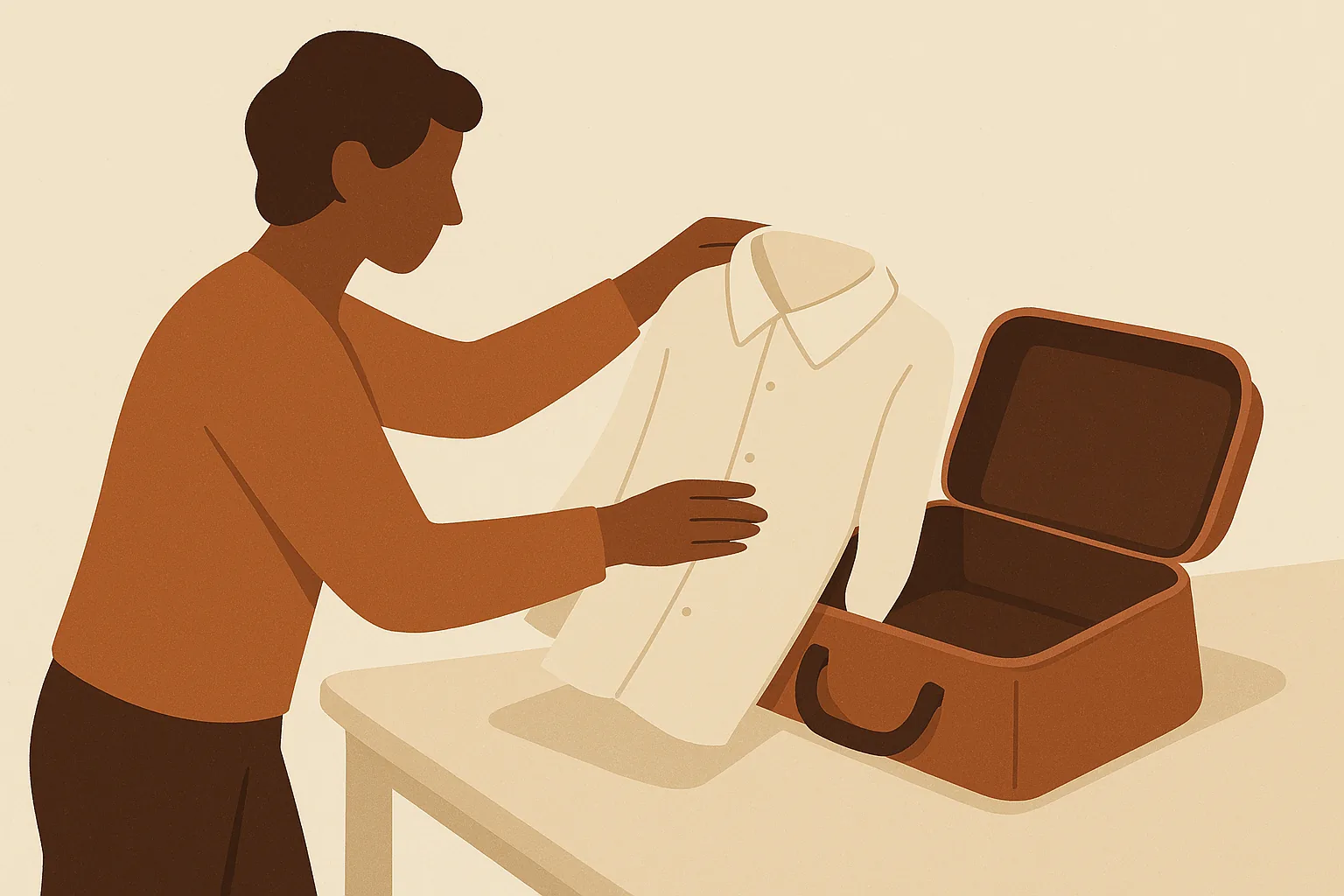
I'm Joshua Albanese, and I've photographed more than 15,000 professionals over 18 years, first in Chicago and now here in Southwest Florida. The single most common thing I hear before a session is some version of "I'm not photogenic." Almost none of it is true. Most of it is nerves, and nerves are what preparation quiets. Here are the five steps I give everyone who books.
Step 1: Rest your face the night before
The best thing you can do for a headshot is sleep, because a rested face reads as calm and healthy before you say a word. Two good nights beat one, since a single late night still shows in your eyes and skin. This is the step people most want to skip and most regret skipping.
Retouching can smooth a lot, but it cannot invent the look of a person who slept. I can soften a shadow under your eyes. I cannot make tired eyes look bright. So the work starts the night before, not in the chair.
A few simple things help your skin behave:
- Hydrate early. Drink water the day before, not just the morning of, so it actually shows.
- Go easy on salt and alcohol. Both puff up the face, especially around the eyes.
- Skip new products. A headshot morning is not the time to try a new cleanser, mask, or exfoliant your skin has never met.
- Keep it normal. Do the routine your face already knows. Familiar beats fancy every time.
Rest is free, and it does more than any camera setting I could choose. Treat it as step one, because it is.
Step 2: Choose wardrobe that keeps the focus on your face
Solid, mid-tone colors in a fit that skims your frame photograph best, because they keep every bit of attention on your face. Tight patterns, pure white, dead black, and logos all pull the eye off you, which is the opposite of what a headshot is for. The clothing's only job is to stay out of the way.
Bring options rather than committing to one shirt at home. Under studio light, colors and fits behave differently than they do in your bathroom mirror. Two or three choices on hangers gives us room to see what actually works on the day.
A quick guide to what tends to read well:
- Necklines that frame your face, like a crew, a clean collar, or a simple V.
- Fabrics with a little structure, which hold their shape instead of clinging or bunching.
- Colors that suit your skin, usually mid-tones over extremes.
- A fit that skims, neither tight nor tent-like.
If you want to go deeper on this before your session, I wrote a full breakdown of seven outfits that photograph well with the specific combinations and the mistakes to avoid. The short version: wear the outfit you feel most like yourself in, and let it be quiet.
Step 3: Handle grooming early, not the morning of
Grooming for a headshot should be done a week or two ahead, not the day before, so everything looks settled and natural. A fresh, day-of haircut often photographs stiff, and skin sometimes reacts to same-day treatments. The goal is to look like yourself on a good day, not like you just left the salon.
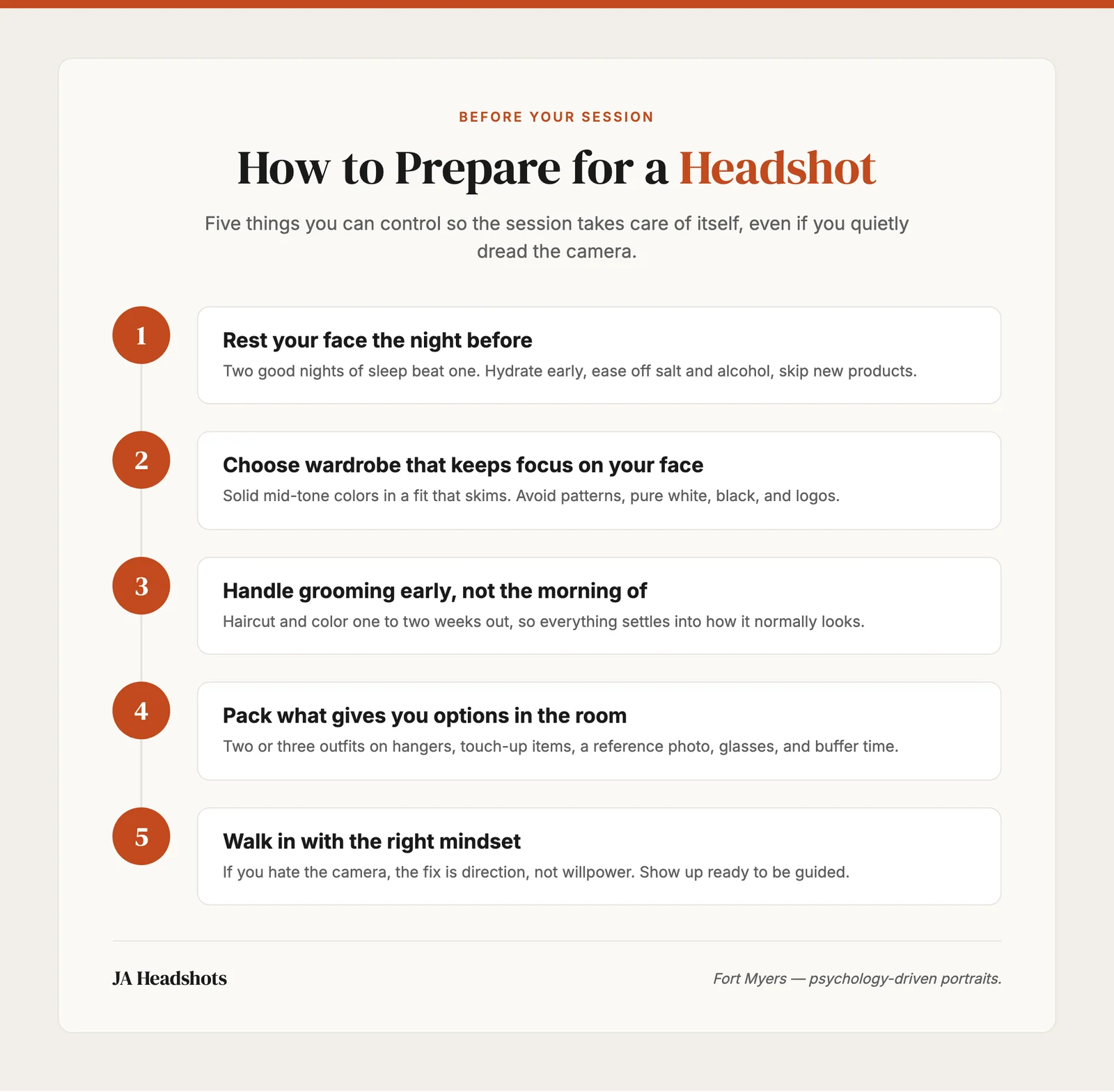
Here is the timing I recommend, in order:
- Haircut and color, one to two weeks out. This lets a cut settle into how it normally falls and gives color time to look lived-in rather than brand new.
- Facials or new skincare, at least a week out. Anything that can redden or irritate skin needs runway to calm down. Never the day before.
- Nails and hands, a couple of days out if your hands might appear in the frame.
- Day-of touch-ups only. A shave, a light press of the shirt, tidy brows. Nothing dramatic.
For makeup, natural and slightly more defined than an average day works well under studio light, since bright light softens definition. If you do not usually wear makeup, you do not need to start now. The point of grooming is consistency with your real, everyday look, so the photo still feels honest to the people who know you.
Step 4: Pack what gives you options in the room
A relaxed session comes from having choices on hand, so pack a small kit the night before rather than scrambling in the morning. The more options you bring, the less any single decision feels high-stakes. Choices are what turn a session from rushed into calm.
Here is what I tell people to bring:
- Two or three wardrobe options on hangers, so nothing arrives wrinkled.
- Grooming touch-up items you already use, like a comb, blotting sheets, or lip balm.
- A reference photo of a look or expression you like, so we are aiming at the same thing.
- A short list of where the images will live, whether that's LinkedIn, your firm's site, a press kit, or all three.
- Your glasses, if you wear them, ideally an anti-glare pair.
- Water and a little buffer time, so you arrive settled rather than sprinting.
Knowing where the photos will be used genuinely changes how I shoot. A headshot built for a recruiter scanning LinkedIn headshots is framed a little differently than one for a law firm's attorney page. Tell me the destination and I can build for it.
Step 5: Walk in with the right mindset, especially if you hate the camera
If you dislike being photographed, the fix is direction, not willpower, so the best mindset is simply to let the session be guided. Most people who call themselves un-photogenic are not fighting their face. They are fighting the awkwardness of standing in front of a lens with no idea what to do with their hands or their expression.
That awkwardness is exactly what a good process removes. My whole approach is psychology-driven for this reason: I direct you into a relaxed posture and a genuine expression, give you feedback the whole way, and take the burden of self-monitoring off your shoulders. You are never left guessing.
The reframe that helps most people is this. You do not have to become someone who loves the camera. You need a process that gets a good photo out of someone who doesn't, and that is a far smaller and more achievable goal. Sessions run without a clock for the same reason, so there is no time pressure forcing a stiff, rushed frame.
Come in rested, dressed simply, groomed a week ago, with your options in a bag, and ready to be directed. Do those five things and the hard part is already handled before you sit down.
The questions I hear most about preparing for a headshot, answered in plain language.
Ready to book a session you'll actually enjoy?
You do not have to love the camera to walk out with a photo you're proud of. If you're ready to get it done right, explore guided headshot sessions with JA Headshots in Fort Myers, built for people who quietly hate having their picture taken. Sessions are directed start to finish, retouching is included, and there's no clock on your time. Call (239) 401-6999 to book.
This article was written by Joshua Albanese, founder and lead photographer at JA Headshots in Fort Myers. He founded a top-10 US headshot studio in Chicago, photographed more than 15,000 professionals over 18 years, and relocated to Southwest Florida in 2024. His psychology-driven approach is built for people who are convinced they are not photogenic.
Frequently asked questions
How do I prepare for a headshot if I hate having my picture taken?
Prepare the practical things the night before so the day itself is calm: sleep well, pick your outfit, and handle grooming early. Then let go of the idea that you have to perform. Most people who say they are not photogenic are not fighting their face, they are fighting the awkwardness of not knowing what to do. A guided session removes that by directing you the whole way, so the pressure to figure it out yourself is gone. Show up rested and let the photographer do the rest.
What should I wear for a professional headshot?
Solid, mid-tone colors in a fit that skims your frame photograph best. Avoid tight patterns, bright white, pure black, and logos, all of which pull attention off your face. Bring two or three options on hangers so you can see them under studio light. Necklines that frame your face cleanly, like a crew, a collar, or a simple V, tend to read well. When in doubt, choose the outfit you feel most like yourself in.
Should I get a haircut before a headshot?
Yes, but time it right. Get a haircut about one to two weeks before your session, not the day before, so it settles into how it normally looks. A fresh, day-of cut often photographs stiff or uneven. For color, the same rule applies. The goal is to look like yourself on a good day, not like you just walked out of the salon. Consistency with your everyday look is what keeps the photo feeling honest.
How much sleep do I need before a headshot?
Aim for a normal, full night, ideally two good nights in a row. Sleep shows up in your eyes and skin faster than almost anything else, and no retouching fully replaces a rested face. Hydrate the day before, go easy on salt and alcohol, and skip any new skincare you have not tried. The camera reads a rested face as calm and healthy, which is exactly the impression a headshot is meant to make.
What should I bring to a headshot session?
Bring two or three wardrobe options on hangers, any grooming touch-up items you use, a reference photo of a look you like, and a short list of where the images will be used. Water and a few minutes of buffer time help too. If you wear glasses, bring them, and consider an anti-glare pair. The more you bring, the more choices you have in the room, and choices are what make a session feel relaxed instead of rushed.
Guided headshot sessions in Fort Myers, built for people who hate having their picture taken. Direction included, no clock.
Learn more
Written by
Joshua Albanese
Photographer, JA Headshots
Joshua Albanese founded one of the top-10 rated headshot studios in the United States in Chicago in 2007. Over 18 years he photographed more than 15,000 professionals and produced over 3 million images for clients ranging from Fortune 500 executives to first-year associates. In 2024 he relocated to Fort Myers and opened a dedicated portrait studio at 1325 Canterbury Dr. His psychology-driven approach is built for people who say they aren't photogenic.