
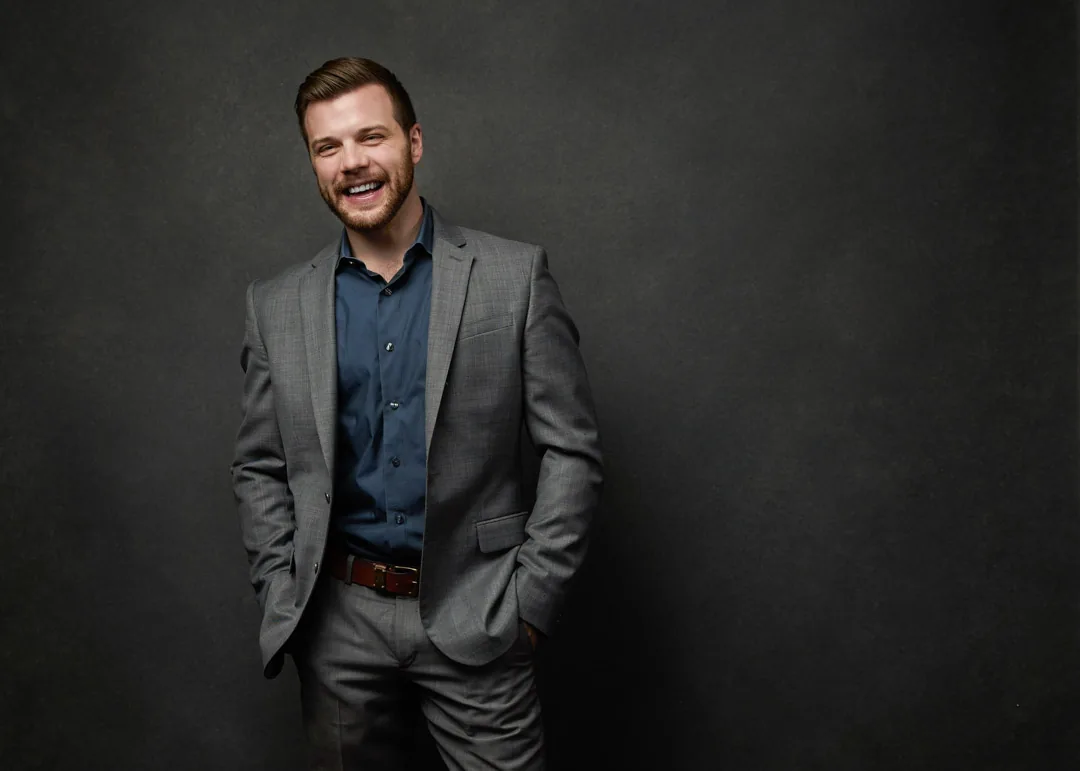
Wondering if you should wear sleeves or go sleeveless for your headshot? Start here, then follow four simple wardrobe rules.
For almost every professional headshot, sleeves are the better choice than sleeveless. A headshot is cropped tight, usually from the chest up, so bare shoulders and arms show up as large areas of skin right next to your face and pull attention away from your eyes and expression. Sleeves keep the frame calm and let your face lead. Sleeveless has its place in creative and personal-brand work, but if you are booking a standard professional headshot session in Fort Myers, plan on sleeves. The four rules below cover why, along with the framing, color, and fit choices that decide whether an outfit helps you or fights you under studio light.
I'm Joshua Albanese, founder and lead photographer at JA Headshots. I've photographed more than 15,000 professionals over 18 years, first in Chicago and now here in Southwest Florida. Wardrobe is the single thing people overthink most before a session, and the sleeves question comes up almost every week. Here is how I answer it, along with the three other rules that matter more than the color of your shirt.
Rule 1: Sleeves almost always beat sleeveless
Sleeves win for professional headshots because they keep skin out of the corners of the frame where it would compete with your face. In a headshot, "sleeves" just means any top that covers your shoulders and upper arms, from a short sleeve to a three-quarter to a full long sleeve. "Sleeveless" means bare shoulders: tank tops, spaghetti straps, and strapless cuts.
The reason this matters comes down to the crop. A professional headshot is framed from roughly mid-chest up, so your shoulders land right at the edge of the picture, only a few inches from your jaw. When those shoulders are bare, the camera sees skin beside skin, and the soft boundary between your face and everything around it starts to disappear. Your eyes lose a little of their pull. Cover the shoulders and that boundary snaps back into place, so your expression carries the frame the way it should.
There are honest exceptions, and I want to be straight about them. If your personal brand is built around fitness, dance, or a more editorial, artistic look, bare arms can be part of the story rather than a distraction. Some creative headshots are meant to feel bolder. But for a corporate profile, a LinkedIn photo, a law firm bio, or a real estate headshot, sleeves are the safe and better default. When someone insists on sleeveless, my usual middle ground is a cap sleeve or a light layer like a blazer, which keeps the shoulders covered while still feeling relaxed.
Rule 2: Dress for the frame you will actually see
The second rule is to spend all of your wardrobe attention on the part of the outfit that appears in the photo, which is the top. Because a headshot is cropped chest-up, nobody will ever see your pants, your shoes, or the bottom hem of your shirt. That sounds obvious, but people routinely stress about a full outfit when only the neckline, shoulders, and collar are going to show.
Once you know that, your choices get simpler. The neckline is doing real work, since it sits closest to your face. A crew, a clean collar, or a simple V tends to frame the face well without crowding it. High, busy, or fussy necklines fight your chin for attention. The shoulders are the next thing the camera reads, which is exactly why Rule 1 lands where it does.
This is also where a layer earns its place. A blazer, a structured jacket, or an open shirt over a tee adds a little architecture at the shoulders and gives the frame some shape and depth. In Southwest Florida heat, nobody wants to think about layers, but you only have to wear it for the few minutes you are in front of the camera in the studio. Bring the layer on a hanger and decide once you see it under the lights. Dressing for the frame means putting your effort where the picture is, and skipping the parts that never make it in.
Rule 3: Choose solid, mid-tone colors that keep the focus on your face
The third rule is to wear solid, mid-tone colors, because they hold attention on your face instead of stealing it. Navy, olive, burgundy, teal, slate, and muted jewel tones all photograph beautifully under studio light and flatter a wide range of skin tones. The color's only job is to support you and then get out of the way.
A few things to steer around, and the reasons why. Pure white can blow out under studio light and take on a faint glow that draws the eye downward. Dead black often flattens into a shapeless block with no visible detail or texture. Tight patterns, thin stripes, and small checks can vibrate or shimmer under the lights, which looks strange in a still photo. Logos and slogans pull attention straight off your face to read the words. None of these are moral failings, they just make the picture work harder than it needs to.
There is a second layer here worth naming: where the headshot will live changes the smart color choice. A photo built for a conservative law firm's attorney page leans a little more traditional, while a personal-brand shot for a coach or creative can carry a bolder color with confidence. Tell me where the images are going and I can help you land the color before we ever start shooting. When you are unsure, pick the color you feel most like yourself in and keep it solid.
Rule 4: Let fit and fabric do the quiet work
The last rule is to choose a fit that skims your frame and a fabric with a little structure, because the two together keep the outfit looking intentional rather than accidental. A top that skims sits close enough to look tailored but never pulls or clings. Too tight and it reads tense and shows every line. Too loose and it swallows your shoulders and adds bulk right where the frame is tightest.
Fabric is the quieter half of this. Materials with some structure, like a light knit, a crisp cotton, or a blazer with a bit of body, hold their shape and photograph clean. Very thin or wrinkle-prone fabrics like unlined linen tend to crease the moment you sit, and those creases show up sharply in a chest-up crop. That is also why I ask people to bring their options on hangers instead of folded in a bag, so nothing arrives with fresh fold lines pressed into it.
Bring two or three tops rather than committing to one at home. Under studio light, colors shift and fits behave differently than they do in your bathroom mirror, and having choices in the room makes the whole session calmer. A common winning kit is one solid mid-tone top, one option with a light layer, and one alternate color. That small bit of range is often the difference between a good frame and the one you actually want to use.
The wardrobe questions I hear most often before a session, answered in plain language.
Ready to get the wardrobe right before you sit down?
You do not have to solve wardrobe alone. Every session at JA Headshots in Fort Myers includes hands-on direction on sleeves, color, and fit, so we sort it out together under the lights instead of leaving it to chance. Sessions are $500, with retouched images at $150 each, and you leave with photos you are genuinely happy to use. When you are ready to book a professional headshot session in Southwest Florida, get in touch through the contact page or call (239) 401-6999.
This article was written by Joshua Albanese, founder and lead photographer at JA Headshots in Fort Myers. He founded a top-10 US headshot studio in Chicago, photographed more than 15,000 professionals over 18 years, and relocated to Southwest Florida in 2024. His psychology-driven approach is built for people who are convinced they are not photogenic.
Frequently asked questions
Is it better to wear sleeves or sleeveless for headshots?
For almost every professional headshot, sleeves are the better choice. A headshot is cropped from the chest up, so your shoulders sit at the edge of the frame right beside your face. Bare shoulders read as a large area of skin that competes with your face and pulls the eye off your expression. Sleeves keep the frame calm and professional. Sleeveless can work for creative, fitness, or personal-brand shoots where bare arms are part of the story, but if you are booking a standard professional headshot, plan on sleeves.
Can women wear sleeveless tops for a professional headshot?
They can, but I usually steer people toward at least a cap or short sleeve for a corporate or LinkedIn headshot. The reason is framing, not formality. With a chest-up crop, spaghetti straps and strapless tops can leave your shoulders looking bare, which reads as skin next to skin and softens the boundary around your face. A cap sleeve, elbow sleeve, or a light layer like a blazer solves it instantly. If your brand is built around fitness, dance, or a more editorial look, sleeveless can absolutely fit the story.
What colors photograph best for a professional headshot?
Solid, mid-tone colors photograph best because they keep every bit of attention on your face. Navy, olive, burgundy, teal, and muted jewel tones tend to read well under studio light. Avoid pure white, which can blow out and glow, and dead black, which flattens into a shape with no detail. Skip tight patterns and logos too, since both pull the eye off you. When in doubt, choose the color you feel most like yourself in and let it stay quiet.
Do I need to bring more than one outfit to a headshot session?
Yes, bring two or three options on hangers. Colors and fits behave differently under studio light than they do in your bathroom mirror, and having choices in the room takes the pressure off any single decision. A mix of one solid top, one with a light layer like a blazer, and one alternate color gives us real range to work with. If you are booking retouched images, extra outfits also let you build a small set of looks from one session.
Guided headshot sessions in Fort Myers, with wardrobe direction included so you never have to guess about sleeves, color, or fit.
Learn more
Written by
Joshua Albanese
Photographer, JA Headshots
Joshua Albanese founded one of the top-10 rated headshot studios in the United States in Chicago in 2007. Over 18 years he photographed more than 15,000 professionals and produced over 3 million images for clients ranging from Fortune 500 executives to first-year associates. In 2024 he relocated to Fort Myers and opened a dedicated portrait studio at 1325 Canterbury Dr. His psychology-driven approach is built for people who say they aren't photogenic.