
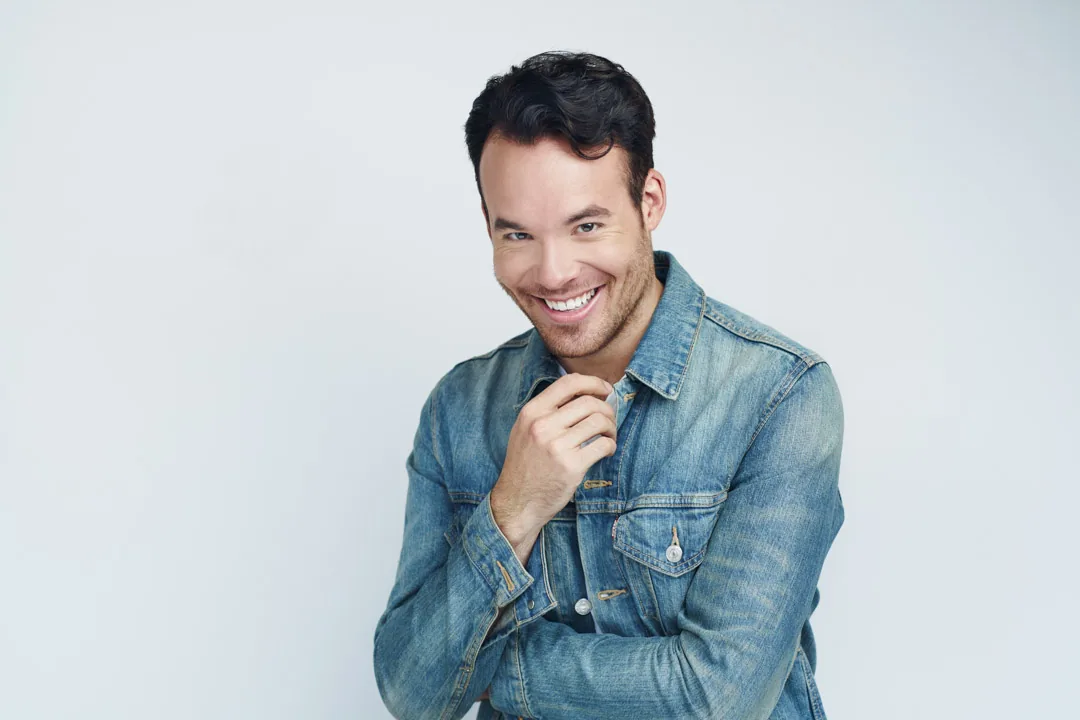
Keep hating every photo of yourself? The 5 headshot mistakes I see most, and the fix for each.
The most common headshot mistakes are bad light, a distorting camera angle, a forced expression, a cluttered background, and an outdated photo, and every one of them is fixable once you know what to look for. I'm Joshua Albanese, and after photographing more than 15,000 professionals over 18 years, these are the five I see over and over. If you would rather have all of them handled for you, my guided photography services in Fort Myers are built to catch exactly these, but this guide breaks down each mistake and how to avoid it yourself.
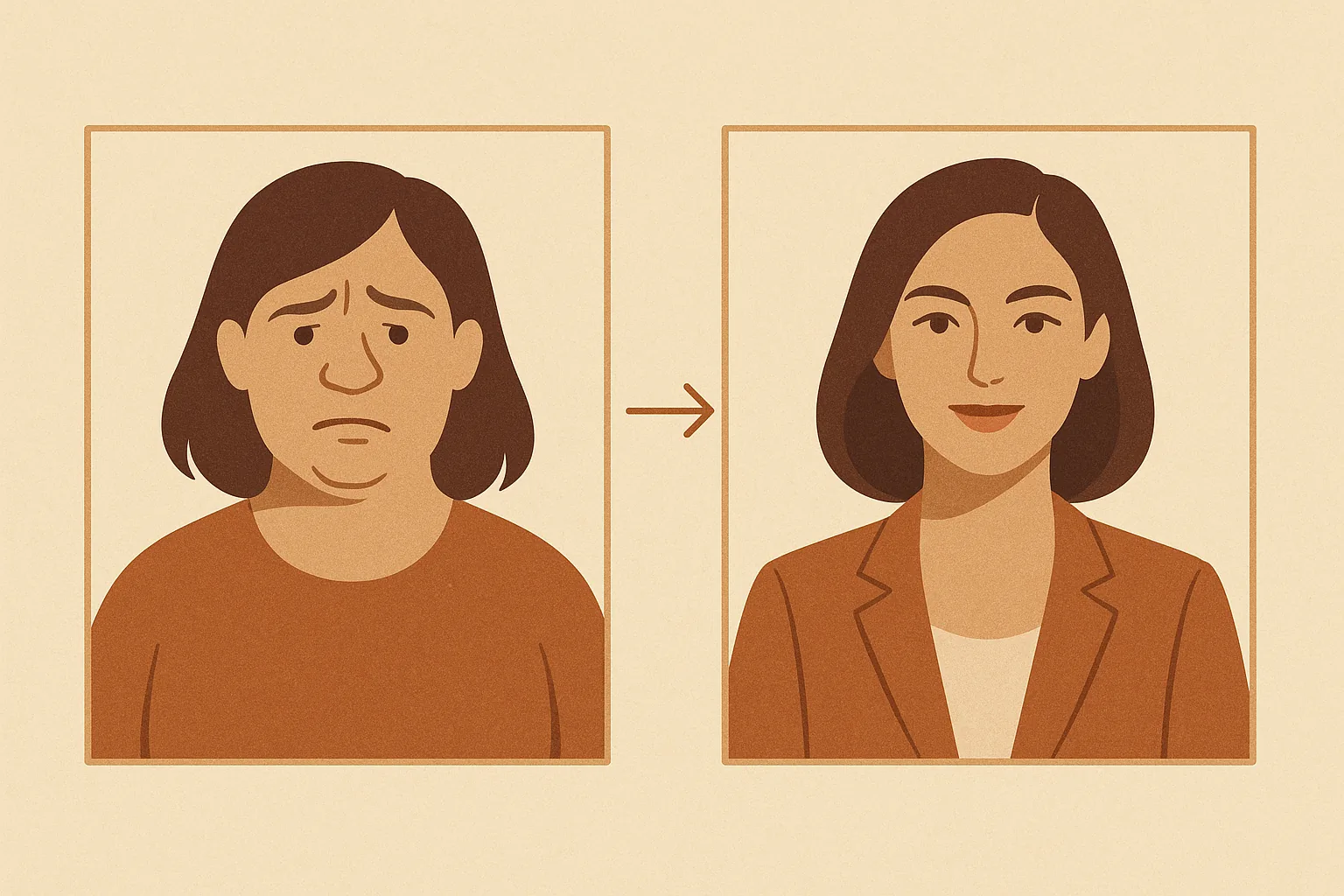
Mistake 1: bad lighting that flattens your face
Bad light is the mistake I see most, and it does the most damage. Harsh overhead office light drops shadows under your eyes and nose. Direct sun makes you squint and blows out half your face. Both flatten your features and age you in ways a camera cannot undo later.
Light is the single biggest factor in whether a headshot reads well. Photographers have understood this since the portrait studios of the early 1900s, when north-facing windows were prized for their soft, even quality. That principle has not changed.
Here is the fix. Face a large window during daylight, with the light coming toward you, not behind you. An overcast day is ideal because the clouds soften everything. Skip overhead bulbs and direct sun entirely. Get the light right and most of the shot is already working.
Mistake 2: the camera angle that distorts your features
The second mistake is holding the camera too close, usually at arm's length for a selfie. When the lens sits inches from your face, it exaggerates whatever is nearest to it. Your nose grows, your forehead looms, and your ears shrink back. You end up looking like a slightly warped version of yourself.
This is basic lens physics, the same reason a phone selfie and a real portrait of the same person can look like two different people. The camera was close in one and a proper distance in the other.
The fix is simple. Put the phone down and prop it at eye level, a step or two back from you. Then zoom or crop in for the tight framing. Backing the camera up keeps your face in natural proportion, which is why this reads as the difference between a professional headshot and a selfie. Distance is doing quiet work in every good portrait.
Mistake 3: a forced or frozen expression
The third mistake is the smile you hold too long. You tell yourself to smile, you lock it in place, and within a few seconds it goes tight around the eyes. The camera catches that tension, and the photo reads as stiff, fake, or a little anxious. This is the part almost everyone struggles with.
The problem is not your face. It is that a smile on command has nowhere real to come from. A genuine expression follows a genuine thought, not an instruction.
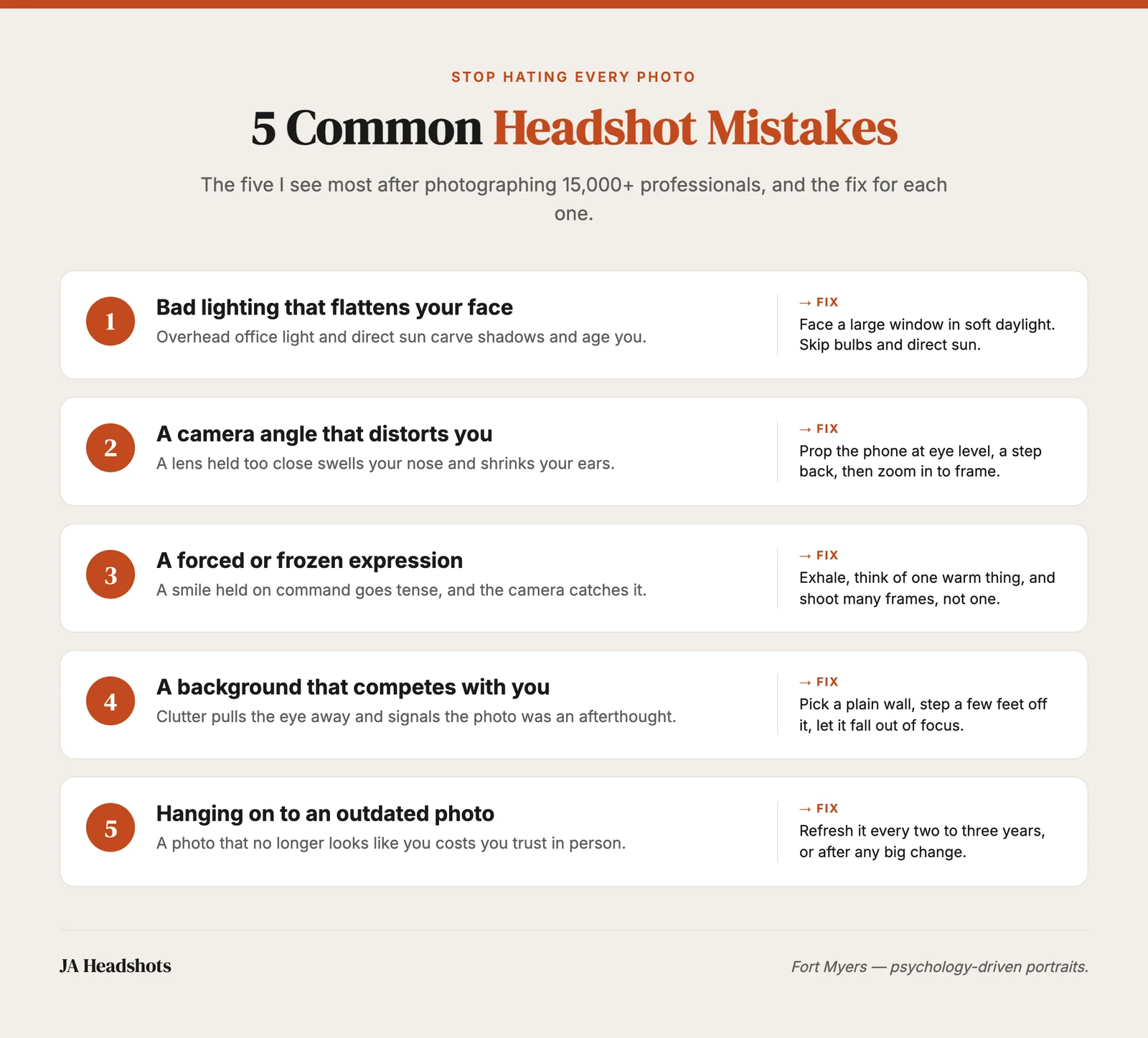
So give yourself something to react to. Exhale slowly right before the frame, drop your shoulders, and think of one specific thing that makes you feel warm, a person, a place, a small win. Then take many frames, not one, and let a real expression slip through. Volume beats willpower here every time.
Mistake 4: a background that competes with you
The fourth mistake is shooting yourself against a busy background. A cluttered bookshelf, a car headrest, a bathroom mirror, or a doorway full of coat hooks all pull the eye away from your face. Worse, they quietly signal that the photo was an afterthought, which is the opposite of the impression you want.
Your background is doing a job whether you chose it or not. A clean one keeps every bit of attention on you, and that is the whole point of a headshot.
The fix costs nothing. Point yourself at the simplest wall or open view you can find, and put a few feet between you and it so the background falls softly out of focus. A plain, uncluttered backdrop almost always beats an interesting one. When people book corporate headshots in Fort Myers as a team, matching the backgrounds is one of the first things we lock down, because a consistent, clean set reads far more credible than a scrapbook of different rooms.
Mistake 5: hanging on to an outdated photo
The fifth mistake happens long after the shoot. You get a decent photo, then use it for a decade. Your hair changes, your glasses change, you gain or lose weight, and the photo slowly stops looking like you. When someone finally meets you in person, there is a small jolt of "that is not who I expected," and that jolt costs you trust.
A headshot should look like you on a normal good day, not a version of you from three roles ago. When it drifts too far from reality, it works against you instead of for you.
The fix is a light rule of thumb. Update your headshot when your appearance has changed enough that people might not recognize you, or roughly every two to three years, whichever comes first. If you changed your hair, your glasses, or your job title, treat that as your cue to refresh. A current photo is a small, cheap form of honesty.
Do you have to fix all five yourself?
No, and this is the honest case for a session. Each mistake is solvable alone, but doing all five at once, in the same shot, while also relaxing your own face, is genuinely hard. That is the exact gap a guided session closes.
A good photographer controls the light, sets the distance and angle, directs you into a real expression, and handles the background, so none of the five is left to luck. You are never standing there wondering what to do with your hands. My pricing is transparent, and you can see the full breakdown on the individual headshot pricing page, with no hidden costs and retouching included on the images you keep.
The reframe I give people who hate photos: you do not have to become someone who loves the camera. You just need a process that gets a good photo out of someone who does not. That is a much smaller, much more reachable goal.
The questions I hear most about headshot mistakes, answered in plain language.
Ready for a headshot without the usual mistakes?
You do not have to guess your way past bad light, a distorting angle, and a frozen smile on your own. If your current photo trips over one or more of these five mistakes, book a guided session through my Fort Myers photography services and get a portrait where all five are handled for you. Sessions are guided start to finish, retouching is included, and there is no clock on your time. Call (239) 401-6999 to book.
This article was written by Joshua Albanese, founder and lead photographer at JA Headshots in Fort Myers. He founded a top-10 US headshot studio in Chicago, photographed more than 15,000 professionals over 18 years, and relocated to Southwest Florida in 2024. His psychology-driven approach is built for people who are convinced they are not photogenic.
Frequently asked questions
What is the single most common headshot mistake?
Bad light, by a wide margin. Harsh overhead office light and direct sun carve shadows under your eyes and flatten your face, and no camera or edit fully recovers from it. Almost every headshot I am asked to fix has a lighting problem at the root. Fix the light first and most of the other problems shrink on their own.
Can I fix a bad headshot in editing instead of reshooting?
Editing can smooth skin and adjust color, but it cannot rebuild light that was never there, correct an angle that distorted your nose, or turn a stiff expression into a relaxed one. Those are captured in the moment or not at all. A quick reshoot in good light beats hours of editing on a photo that started wrong.
How close should the camera be for a headshot?
A step or two back, then zoomed or cropped in, never up close. Holding a phone at arm's length puts the lens too near your face and pushes your nose and forehead forward, which reads as distortion even if you cannot name why. Backing the camera up and framing tighter keeps your features in natural proportion.
Why do I look stiff or fake in every photo?
Usually because you are holding a smile on command with no idea whether it is working. A held expression goes tense within seconds, and the camera catches the tension. The fix is a real thought instead of a posed smile, and enough frames that a natural one slips through. Direction removes the guesswork entirely.
How often should I replace my headshot?
When your appearance has changed enough that people might not recognize you, or roughly every two to three years. A photo that no longer looks like you creates a small jolt of distrust the moment someone meets you in person. If you changed your hair, your glasses, or your role, it is time for a new one.
Guided headshot sessions in Fort Myers that fix all five mistakes for you, retouching included.
Learn more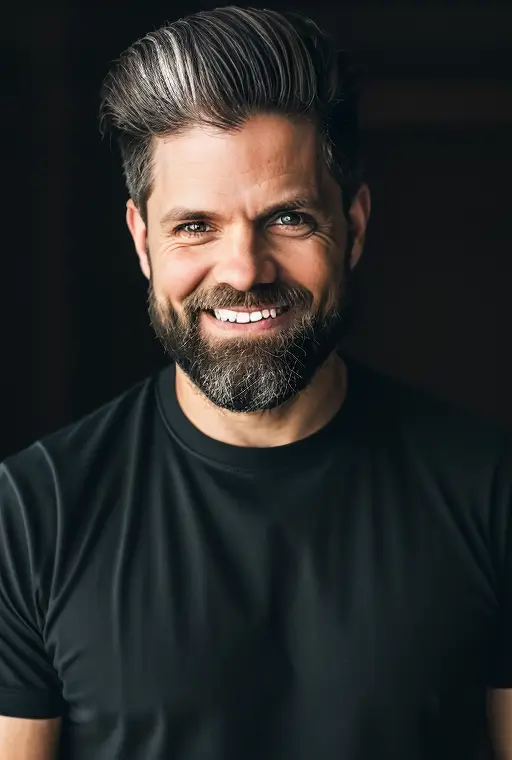
Written by
Joshua Albanese
Photographer, JA Headshots
Joshua Albanese founded one of the top-10 rated headshot studios in the United States in Chicago in 2007. Over 18 years he photographed more than 15,000 professionals and produced over 3 million images for clients ranging from Fortune 500 executives to first-year associates. In 2024 he relocated to Fort Myers and opened a dedicated portrait studio at 1325 Canterbury Dr. His psychology-driven approach is built for people who say they aren't photogenic.