
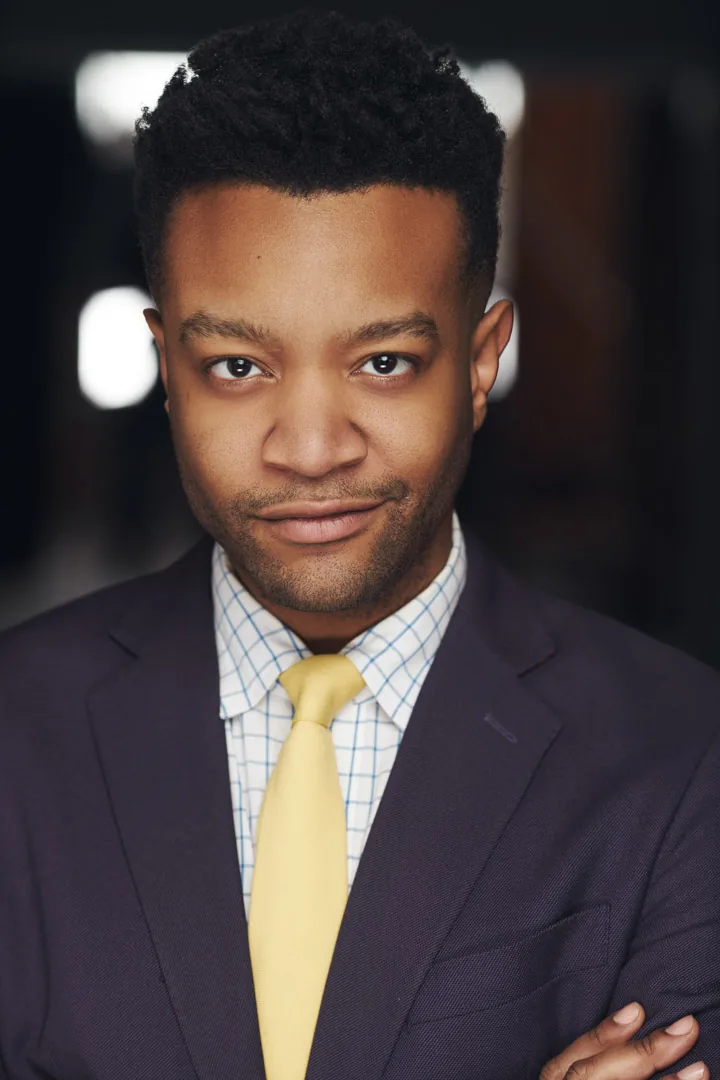
A recruiter scans your LinkedIn profile in three seconds. A patient picks a doctor on Healthgrades in five. A potential client decides whether to call your law firm in four. Your face shows up before your name, and the brain has already made a call by the time the eye reaches your title.
This is a working photographer's case for why a real headshot earns its cost back. Written by Joshua Albanese, who has photographed 15,000+ professionals across 18 years.
How fast do people form first impressions from a headshot?
100 milliseconds. Princeton psychologists Janine Willis and Alexander Todorov found in 2006 that people make trait judgments (trustworthiness, competence, likeability) in a tenth of a second of seeing a face. More time didn't change the verdict, only made people more confident in it.
Follow-up work from Todorov's lab and Cornell's perception researchers extended the finding to hiring, voting, and purchase choices. The face does the introduction. The resume confirms what the face already said. See Princeton's coverage of the Willis and Todorov findings.
Your headshot is not a profile asset. It's the closing argument the brain made before any other information landed.
Does a profile photo actually change conversion?
Yes, and the numbers are not subtle. LinkedIn's research found profiles with a professional photo get up to 21 times more profile views, 36 times more messages, and 9 times more connection requests than profiles without one. A real photo isn't optional. It's the highest-impact asset on the page.
A few specifics:
- No photo is worse than a bad photo. A blank avatar reads as inactive. A casual selfie reads as low-effort. Both lose; the blank loses harder.
- An outdated photo costs trust. A picture that doesn't match the person walking into the meeting creates 10 minutes of small disorientation.
- A real photo beats stock on company pages. Even modest "real human" portraits outperform polished stock in B2B sales-page conversion.
For more, see Harvard Business Review on personal brand.
Why do attorneys need a real headshot for their bar profile?
Clients pick lawyers from the photo first, the bio second. Avvo, Super Lawyers, the Florida Bar directory, the firm's attorney page. Every one is a thumbnail grid. The grid is cut one. A bad photo dies at cut one.
The American Bar Association has tracked online presence as a primary driver of new client acquisition for solo and small-firm attorneys for nearly a decade. Most attorneys treat the bar photo like a low-stakes asset. The better-photographed lawyer down the street picks up the call.
Why do doctors need a real headshot for Healthgrades?
Trust is a photographed quality. Patient-choice studies consistently find patients pick physicians based on perceived warmth and competence in the profile photo before reading a single review. A clean studio photo with present eyes converts higher than a hospital ID photo or a 10-year-old conference crop.
On Healthgrades, Doctor.com, hospital staff pages, and Vitals, the headshot does what the brochure used to do. Patients pick doctors with a face they trust. Faces they trust are well-photographed.
Why does a founder or executive need a press-ready headshot?
Reporters use whatever photo is available. The first time a journalist writes about your company or your raise, the assignment desk grabs from your website or LinkedIn. An iPhone selfie or a 2018 conference crop is what runs in TechCrunch, Forbes, Inc., or your local business journal. That photo lives forever.
Real consequences we've seen:
- A founder's bad headshot ran in Forbes. The article hit page one of Google for two years. They paid for a re-shoot and an SEO push.
- An executive's outdated photo got picked up for a board profile. The board member next to them commented on the mismatch.
- A press release went out with a stock photo. The reporter dropped the story.
If you're C-suite, partner, or founder, you need a press-ready headshot in your media kit. Don't let a journalist pick from what's on your LinkedIn.
Are headshots different for different industries?
The lighting and posing conventions differ, but the underlying need doesn't. A finance partner's portrait wants confident, settled, no novelty. A creative director's portrait wants energy and a hint of personality. A doctor's portrait wants warmth and accessibility. Same camera, same studio, different direction.
What's identical across industries is the failure mode. In every industry, the bad outcomes look the same:
- The photo doesn't match the person who walks in
- The photo is older than five years
- The photo is a casual snapshot that signals "didn't care enough"
- The photo is an AI generation that signals the same thing
A working headshot photographer adjusts direction by industry, but the technical baseline (light quality, eye direction, expression specificity) is the same.
How long does a professional headshot stay current?
2 to 4 years for most professionals. Less if you've changed something obvious (haircut, weight, glasses, beard). Industries that put a premium on freshness (real estate, sales, talent-facing roles) tend to refresh at 18 to 24 months. Industries with longer arcs (law partners, surgeons, executives) tend to refresh at 3 to 5 years.
The cost-per-year math works out. A $1,000 headshot session that lasts 3 years costs $333 per year. That's less than the price of a single bad first meeting that didn't happen because the photo killed the click. We did the full breakdown in our how often to update your headshot post.
What does a headshot actually accomplish in 2026?
Six things, in order of dollar impact for most professionals:
- Earns the click. Your profile is one of 200 a recruiter or client scans. The photo is the first cut.
- Earns the call. Once they click, the photo is the only emotional anchor on the page. A real photo is what makes a stranger pick up the phone.
- Earns the trust. Patients, clients, and customers extend trust to faces, not to bios. The photo carries the trust signal.
- Earns the press. A working media kit photo is what gets picked up by reporters and used everywhere.
- Earns the introduction. When someone Googles you before a meeting, the photo sets the tone.
- Earns the recovery. When something goes wrong (a bad review, a scandal, an article you'd rather not exist), a polished, real, recent photo shifts the visual narrative back to "this is a real, professional human."
That's the case. It's not "good photos are nice to have." It's that the photo is a working, revenue-adjacent asset, and treating it like a personal vanity project leaves money on the table for years.
Is a smartphone selfie ever enough?
For an internal Slack avatar, a Substack header, or a personal Instagram, sure. For anything that touches hiring, sales, patient acquisition, client acquisition, press, investor relations, or board work, a smartphone selfie is a tax. It costs you trust on every view. The accumulated cost across a year of profile views is bigger than the cost of the session.
We've covered the AI photo question separately in the truth about AI headshots. The short answer is the same: AI is fine for low-stakes, real headshots are required for high-stakes, and most working professionals operate in higher stakes than they realize.
Frequently asked questions
Are headshots important for people who aren't job searching? Yes. Profile views happen continuously, not just during a search. A patient picking a therapist, a journalist sourcing a quote, a parent vetting a tutor, a board member checking up on their CEO. The photo is doing work whether you're actively looking or not.
Do remote workers need headshots? More, not less. When the team isn't in the same room, the LinkedIn photo and the Slack avatar are doing all the visual work. Remote work amplifies the importance of every visual identity asset.
What if I just don't like having my photo taken? That's the most common reason professionals delay. A working photographer adjusts pacing and direction for clients who don't love the camera. The session looks different than what people picture in their head. We've shot for thousands of clients who started with "I take terrible photos" and walked out with a portrait they actually liked.
How much does a professional headshot session actually cost? $400 to $700 session fee plus $100 to $200 per retouched image is the working-studio band in most US markets. JA Headshots sits at $500 + $150 per image, with team rates from $1,500 and a $5,000 full buyout. We break down the full cost picture in our professional headshot cost post.
Are headshots really worth the cost for a small business owner? A real headshot for a small business owner pays itself back the first time it earns a client call. For most consultants, attorneys, real estate agents, financial advisors, and medical professionals, that happens in the first 90 days. The cost is fixed, the upside compounds for years.
Life's too short to blend in. Your photo is doing the introduction. Make sure it's the right one.