
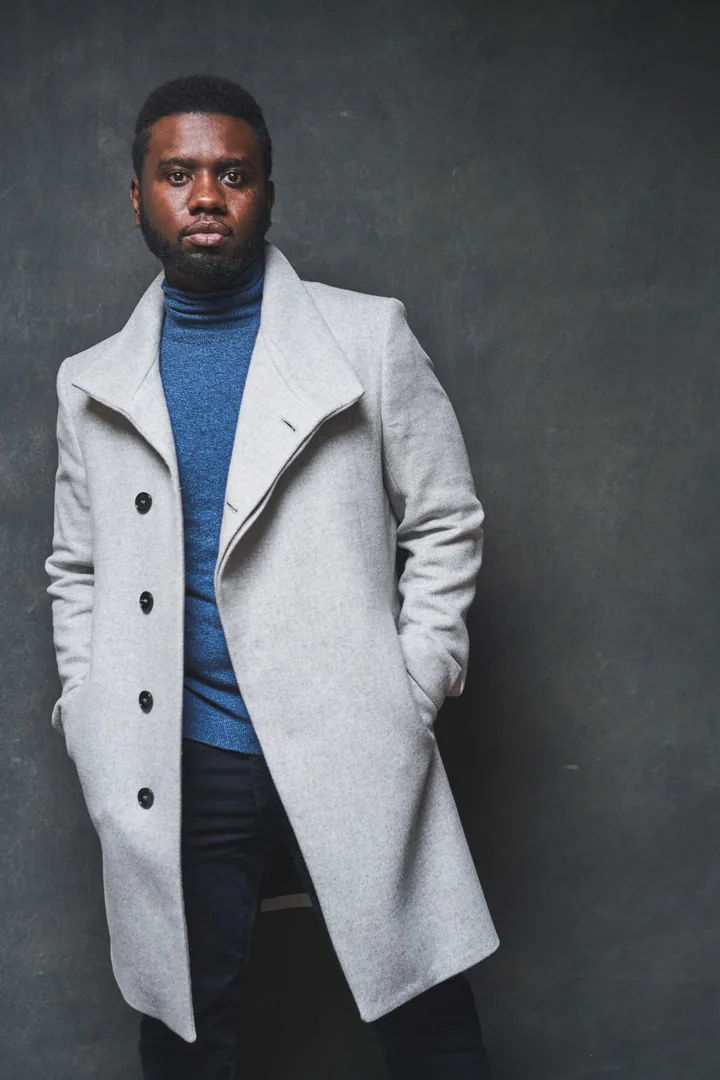
Ask ten photographers the most common reason a headshot doesn't land, and eight will say wardrobe. Wrong color, wrong fit, wrong fabric, wrong pattern, brand-new outfit nobody's worn yet. The shoot can be technically clean, the expression can be honest, and the photo still reads off because the shirt is fighting the face.
This is a working photographer's wardrobe guide for professional headshots, written for the people who actually have to dress themselves on the morning of the shoot. Joshua Albanese has photographed 15,000+ sessions across 18 years, ran a top-10-rated headshot studio in Chicago, and now operates JA Headshots in Fort Myers. Every rule below has been tested against real-world client galleries. No fashion theory, no Pinterest aesthetic. What works on camera, what doesn't.
What should I wear for a headshot?
Solid colors in jewel tones, navy, charcoal, white, or cream, in fabrics that hold their shape, in a fit that's already been worn at least twice. Avoid busy patterns, brand-new outfits, white-on-white if your background is white, and anything that pulls or bunches when you sit. Bring two to three options to the session. Iron everything the night before. That's the entire system. The next sections are the supporting detail.
What colors hold up on camera?
Some colors photograph well. Some don't. The list isn't subjective. Camera sensors handle saturated mid-tones better than washed-out pastels, and the human eye reads bold solid color as confident before it processes anything else.
Colors that photograph well:
- Navy. The single most reliable color on camera. Reads professional, slimming, and warm against most skin tones.
- Charcoal and dark gray. Studio-friendly, neutral, almost universally flattering.
- Jewel tones. Emerald, sapphire, ruby, deep amethyst. Bring saturation without going loud.
- White and cream. Clean, but watch the background match (more on that below).
- Black. Works for some skin tones and not others. Test it before you commit.
- Burgundy and oxblood. Authoritative without being aggressive.
Colors that fight the camera:
- Bright red. Bleeds into surrounding tones, especially on consumer cameras. Stick to deeper red shades.
- Neon and fluorescents. Unflattering color cast on skin.
- Beige and oatmeal. Wash out against most studio backgrounds.
- Mustard yellow. Shifts skin tone unpredictably.
The rule is simple. If the color is bold and clean, it photographs. If it's washed out or fluorescent, it doesn't.
What patterns should I avoid?
Three patterns break headshots. Avoid all three.
- Tight stripes. Anything narrower than a quarter-inch produces moire, the rainbow shimmer that happens when fine repeating patterns confuse the sensor. Pinstripe suits are the worst offender.
- Busy plaids and checks. They pull the eye off the face. The photo becomes about the shirt, not the person.
- Logos and graphics. Even a small logo dates the photo and reads casual.
Solid colors win 9 times out of 10 for headshots. If you want texture, look for fabric weave (oxford cloth, herringbone, knit) rather than printed pattern. The texture reads on camera without competing with the face.
Should I match my background or contrast it?
Contrast. Always.
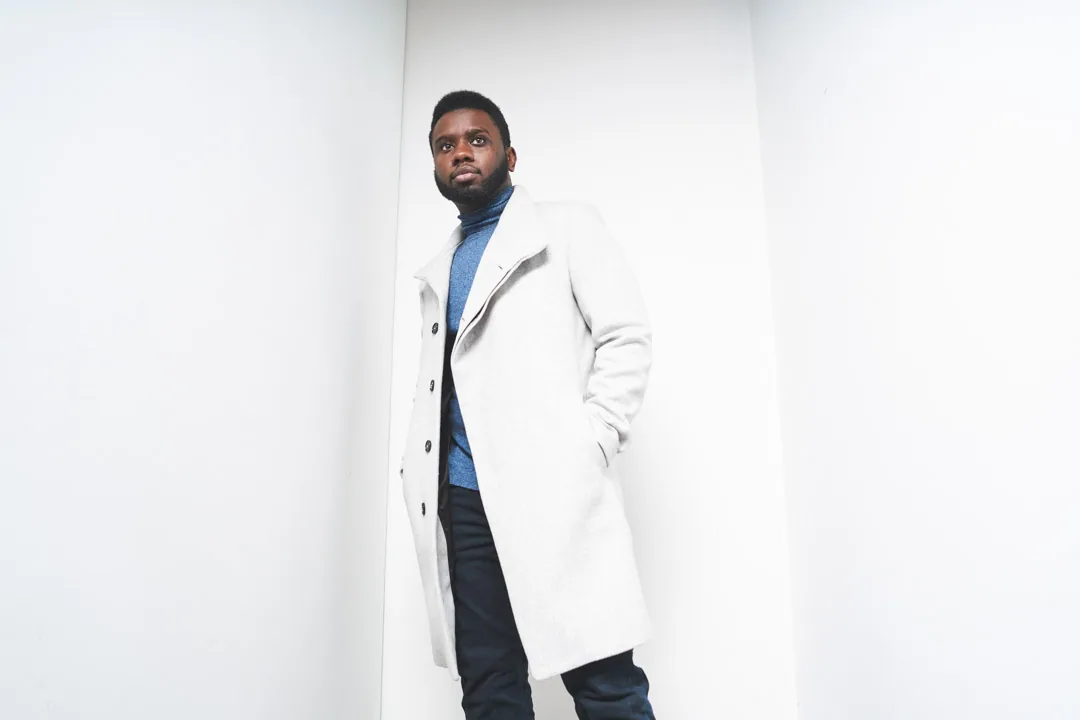
If your background is white or light gray, wear medium to dark tops. Navy, charcoal, jewel tones, dark patterns. White-on-white shirts disappear into white backgrounds and your head ends up floating. If your background is dark gray or black, wear lighter tops. Cream, soft gray, mid-blue, lighter jewel tones. Black-on-black collapses your shoulders and chest into a void.
Most professional studios shoot on either a clean white or a medium gray. Ask the studio which background they're using and dress accordingly. JA Headshots offers both and we tell every client which color works against which backdrop in their wardrobe before the shoot.
What about fit, fabric, and the new-outfit trap?
Fit beats brand. A $40 thrift-store blazer that fits well photographs better than a $1,500 designer jacket that pulls across the shoulders. The camera reads tension. Anything tight at the bicep, gapping at the bust, bunching at the waist, or pulling at the sleeve will show up immediately on camera and look worse than it does in the mirror.
Three rules.
- Don't wear a brand-new outfit on the day of the shoot. Wear it twice first. New fabric stands away from the body in unflattering shapes. Worn fabric drapes.
- Iron or steam everything the night before. Wrinkles read on camera at 200% of how they look in person.
- Avoid heavy synthetics. Cheap polyester reflects flash unevenly and reads plasticky. Wool, cotton, silk, linen, and quality knits all photograph well.
If you can pinch the fabric and watch it fall back into place, you're good. If it stays creased, change.
Industry quick guide
Different industries call for different reads. Here's the working photographer's shorthand.
Lawyer or attorney. Suit and tie for men, suit or blazer-and-blouse for women. Navy, charcoal, dark gray. Solid color tie or subtle small pattern. Avoid pinstripes (moire). Burgundy or deep red ties read authoritative. The American Bar Association's coverage of attorney online presence consistently finds traditional formal wardrobe outperforms business-casual for trust signals on legal directories.
Doctor or healthcare. Two options. Either clinical (white coat, scrubs, stethoscope) or business professional (blazer, blouse, button-down). Choose based on the photo's destination. Hospital staff page wants clinical. Private-practice marketing wants business professional. Avoid casual wear, always.
Real estate agent. Business casual to business professional. Blazer over a polished blouse or crisp shirt. The National Association of Realtors brand guidelines reference an aspirational, polished read. Stay away from casual outdoor wear unless the photo is specifically environmental.
Finance and accounting. Conservative business professional. Navy, charcoal, black. Subtle ties, real cuffs, tailored shoulders. The audience reads risk-tolerance off the photo. Don't surprise them.
Creative or marketing. Smart casual to business casual. A well-fit knit, a quality blazer over a t-shirt, a structured top in a saturated color. Personality is allowed. Sloppiness isn't.
Tech and startups. Whatever the founder actually wears. Quality basics, well-fit, in solid colors. The photo should match the company's actual brand. A founder in a suit when the company runs casual reads off.
Education and academia. Business casual. Quality knits, structured blazers, conservative palette. Less formal than law, more formal than tech.
Hair and makeup
You don't need professional hair and makeup for a headshot. Some clients want it, some don't. What matters is consistency with how you actually look on a normal Tuesday at the office. The point of the photo is recognition. If your hair on the shoot day looks dramatically different from your normal hair, the photo doesn't do its job.
Practical rules:
- Get your haircut 7 to 14 days before the shoot, not the day before. Fresh cuts photograph slightly stiff. A two-week-old cut looks lived-in.
- Wear the makeup you'd wear to an important client meeting. Not more, not less.
- Skip aggressive contouring or Instagram-style heavy brows. They date the photo.
- Men, get a beard trim 2 to 3 days before. Same logic as the haircut.
If you're booking professional hair and makeup, schedule it 60 to 90 minutes before the shoot starts.
What to bring on the day
Two to three options. Not seven. The studio doesn't have time for a fashion show, and choice paralysis kills sessions.
A working list:
- Three tops in your best photographing colors
- One blazer or jacket
- One backup shirt for sweat or coffee accidents
- A lint roller
- A small steam iron if you're driving and worried about wrinkles
- A pocket mirror
JA Headshots provides a wardrobe rack, lint rollers, and a full-length mirror in the changing area. Most clients shoot two outfits. A few shoot three. Beyond that, you're using session time on logistics instead of expression.
Frequently asked questions
Should men wear a tie? Depends on the industry. Lawyers, finance, executives, formal corporate roles, almost always yes. Tech, creative, sales, real estate, often no. Tie color matters less than tie pattern. Solid or small subtle pattern photographs better than busy stripes or novelty.
What about glasses? Wear them if you wear them daily. The photo should match how clients and colleagues see you. Tell the photographer in advance and they'll adjust the lighting to avoid glare on the lenses.
Can I wear a t-shirt? For most professional headshots, no. For a creative or tech founder where casual is the brand, a high-quality, well-fit, solid-color t-shirt under a structured blazer can work. Avoid graphic tees, V-necks, and anything that's been washed thin.
Do I need to wear a suit? Only if the destination of the photo demands it. A lawyer's Avvo profile demands a suit. A startup founder's website usually doesn't. Match the wardrobe to the audience reading the photo.
Should I wear jewelry? Simple, classic, minimal. A watch, small earrings, a wedding band, a single understated necklace. Skip statement pieces. They date the photo and pull the eye off the face.
External references for further reading: - American Bar Association's coverage of attorney online marketing - NAR's REALTOR brand standards for real estate professionals