

Solo headshots are easy to dress for. The person picks the outfit, the photographer reacts, the photo lands. Corporate headshots are different. Twenty people rotate through one studio in one day, every photo has to look like it belongs in the same gallery on the same About page, and any wardrobe accident gets multiplied across the team. One person in a coral floral shirt becomes the only thing anyone sees on the wall.
This is a working photographer's guide to corporate headshot wardrobe, written for HR coordinators, marketing managers, and team leads who are running point on a company shoot. Joshua Albanese has photographed 15,000+ sessions across 18 years, including hundreds of full-team corporate days at law firms, finance offices, healthcare practices, and tech startups in Chicago and Fort Myers. The system below is what works in practice, not in theory.
What should employees wear for corporate headshots?
Solid colors only when the team shoots together. Navy, charcoal, white, cream, and a small set of approved jewel tones. No patterns, no logos, no graphic tees. Business professional or business casual, matched to the company's actual brand. HR sends a one-page wardrobe guideline 7 days before the shoot. Everyone wears the same dress code, even if their day-to-day differs. That's the consistency rule. The next sections explain why and how.
Why does HR send wardrobe guidelines before the shoot?
Because corporate headshots get used as a set, not as individuals. The photos appear together on the team page, in pitch decks, in press kits, in proposal documents, on LinkedIn company profiles. When 20 photos appear in a 4-by-5 grid, any wardrobe outlier becomes the visual focal point of the entire grid. A single person in bright magenta when everyone else is in navy and charcoal pulls every viewer's eye away from the team and onto the outfit.
That's why HR or marketing sends the guidelines. Not because the company is being controlling. Because the gallery is a brand asset and a single uncoordinated wardrobe choice undermines the asset. Harvard Business Review's coverage of executive presence consistently cites visual consistency as a leadership signal at the team level.
The consistent backdrop, varied wardrobe rule
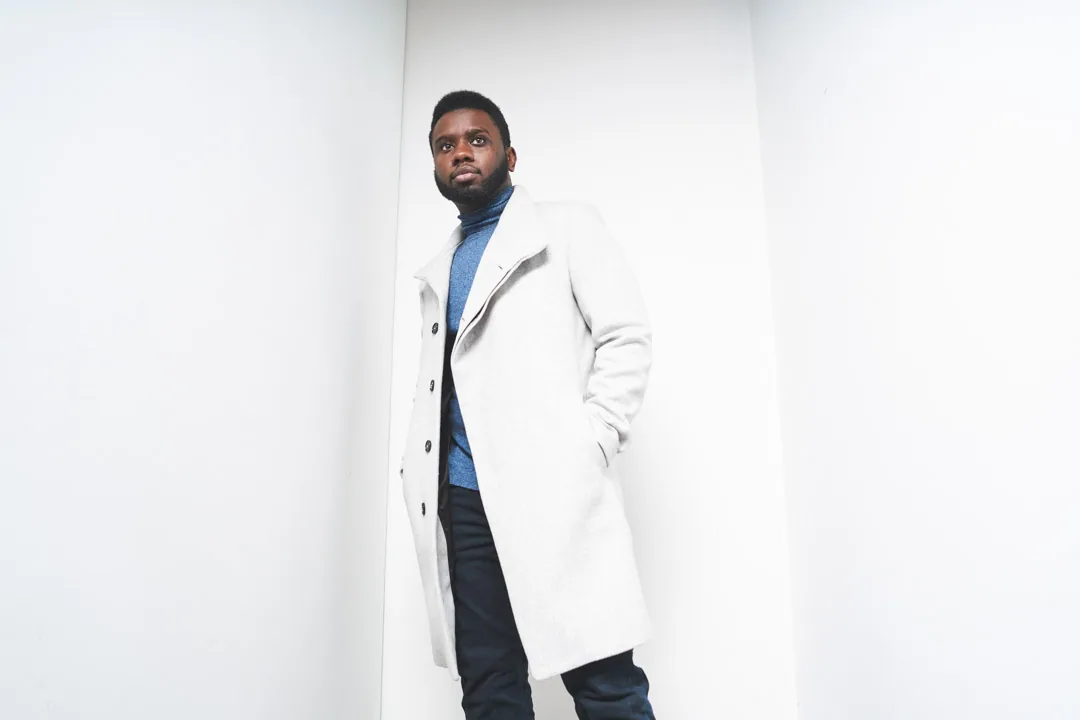
The professional standard for a corporate gallery is one backdrop, varied wardrobe within a tight palette. Same studio, same lighting, same background color across all 20 photos. Wardrobe varies inside a 4-to-6 color palette so each person looks like themselves, but the gallery reads as a single coherent set when viewed together.
What this means in practice:
- One background color across the entire shoot. Usually a clean white, a medium gray, or the company's brand color in a muted tone.
- One lighting setup across the entire shoot. Same key light, same fill, same hair light, same exposure.
- A 4-to-6 color wardrobe palette. Navy, charcoal, white, cream, plus one or two approved jewel tones from the brand palette.
- Same crop and orientation across the gallery. Either all head-and-shoulders, all chest-up, or a deliberate mix that reads on purpose, not by accident.
The result is a team page where each person reads as themselves, the firm reads as coherent, and no single photo dominates the grid. That's the look professional services firms, ZIPCODE-tier companies, and serious B2B brands ship.
Solid colors only when teams shoot together
Patterns are the single biggest accident on corporate days. One person shows up in a paisley tie, another in a small check shirt, a third in a floral blouse. Individually each is fine. Together in a 4-by-5 gallery, the patterns clash, the eye darts between them, and the gallery reads chaotic.
The fix is a hard rule on shoot day: solid colors only. Texture is allowed (oxford weave, herringbone, knit, soft suede). Printed pattern is not. The HR guideline should name this explicitly. "Solid colors only. No prints, plaids, stripes, or graphic prints. Subtle texture welcome." Five words on a one-page email saves an hour of frustrated edits in post.
What goes in the HR wardrobe email?
A working corporate-shoot wardrobe email is one page, sent 7 days before the shoot, with three sections. Name the dress code, name the palette, name the don'ts.
A working template:
- Dress code. Business professional. Suits, blazers, button-downs, blouses. Tie required for men in client-facing roles.
- Approved palette. Navy, charcoal, dark gray, white, cream, and the firm's brand burgundy. No other colors.
- Don'ts. No patterns. No logos. No graphic tees. No bright reds. No white-on-white if you're standing in front of a white background. No new outfits worn for the first time on shoot day.
- Logistics. Bring two outfit options. Iron everything the night before. Plan to arrive 15 minutes before your scheduled time.
That's it. Don't over-write the email. Five bullets, one page, signed by the marketing or HR lead. Resend it 24 hours before the shoot.
How to handle dress-code variation across departments
Most companies have departments that dress differently day-to-day. The legal team wears suits. The engineering team wears jeans and t-shirts. The marketing team wears business casual. The accounting team wears something between the legal team and marketing.
Two acceptable approaches.
Approach 1: Lift everyone to the same level. Engineering puts on a blazer for the day. The whole team photographs at business professional. The gallery reads consistent across departments. This is the standard at law firms, finance offices, healthcare practices, and most professional services firms.
Approach 2: Allow tiered dress codes. Client-facing leadership wears business professional. Internal-facing engineering and design wear smart casual within the same palette. The gallery reads slightly varied but coherent inside the palette. This is increasingly common at tech companies and modern professional services firms where forced uniformity reads dated.
Pick one and stick to it across the entire shoot. Mixing rules within a single team gallery looks like a mistake.
Industry-specific wardrobe rules
Different industries call for different defaults. Quick reference for HR planning a corporate day.
Law firms. Suit and tie for men, suit or blazer-and-blouse for women. Navy, charcoal, black, dark gray. The Avvo and Super Lawyers gallery is the audience, and traditional formal wardrobe outperforms business casual on those platforms.
Finance and accounting. Conservative business professional. Same palette as law. Risk-averse audiences read the wardrobe as a signal of risk tolerance.
Healthcare and medical practices. Two options. Either clinical (white coat, scrubs) for hospital staff pages, or business professional for private-practice marketing. Pick one for the whole shoot.
Real estate brokerages. Business professional to polished business casual. Match what the National Association of Realtors brand standards reference.
Tech and SaaS. Smart casual within a tight palette. Avoid hoodies and graphic tees on the team page even if they're worn day-to-day. The team page is a sales asset, not a culture page.
Consulting and professional services. Business professional. Navy, charcoal, white, cream. The audience expects polish. Deliver it.
How JA Headshots runs a corporate day
A working corporate day at the studio is structured. Same lighting setup all day. One backdrop unless the firm specifically wants two. A wardrobe coordinator on site (the photographer's assistant) handling lint rolls, collar adjustments, and hair touch-ups between subjects. A 15-minute slot per person, with 10 minutes of buffer between groups.
For a 20-person team, that's a full day on site, 8am to 4pm. Sessions start at $1,500 for small teams and scale from there. On-location days are available across the Fort Myers, Cape Coral, Naples, Estero, Bonita Springs corridor. The studio handles backdrop, lights, and direction. HR handles wardrobe coordination and the shoot schedule. We send the schedule and the wardrobe email template 14 days before the shoot.
Common mistakes on team days
Five accidents we see most often.
- No wardrobe email sent. Half the team shows up in patterns or off-palette colors.
- Email sent the day before. People can't iron, swap, or buy by then. Send 7 days out.
- Mixed lighting setups. Lock the lighting before subject one.
- Mixing crop or orientation. The gallery reads inconsistent.
- Skipping the wardrobe coordinator. A lint roller between subjects saves an hour of retouching.
Frequently asked questions
How far in advance should HR send the wardrobe guidelines? Seven days minimum. Resend 24 hours before. Anything less than 7 days and people don't have time to plan or buy.
Should the whole team wear the same color? No. Same palette, varied within it. A team where every person wears navy reads as a uniform, not a brand. Pick a 4-to-6 color palette and let each person choose inside it.
What if an executive insists on a wardrobe choice that breaks the palette? Common at the C-suite level. Two options. Either accept the variation as a deliberate choice for the most senior people, or have a private conversation about gallery consistency before the shoot. The photographer can support both.
Should we use professional hair and makeup? For executive-level team members, often yes. For mid-level employees, optional. If you offer it to anyone, offer it to everyone in the same role tier. Don't make it a status signal.
What about virtual employees who can't make the studio day? Schedule them at a satellite session within 30 days, using the same lighting setup, same backdrop, same wardrobe palette. JA Headshots keeps the lighting recipe on file so remote sessions match the on-site team day.