
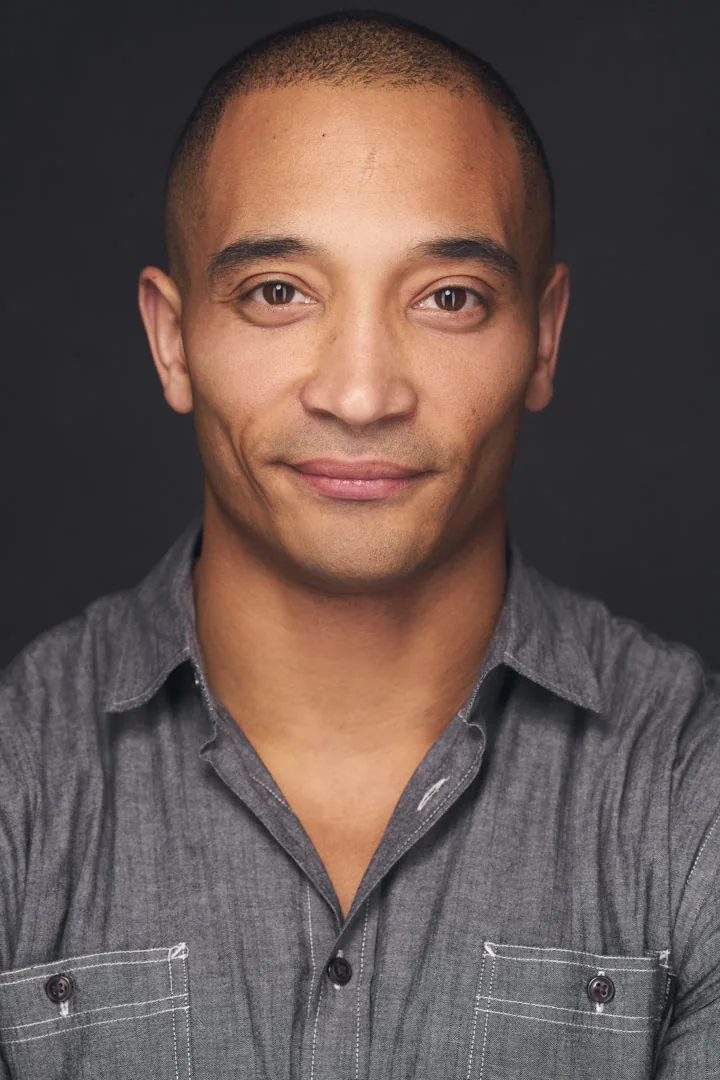
Want a headshot that earns trust at a glance? How to take a professional headshot, from light to lens to expression.
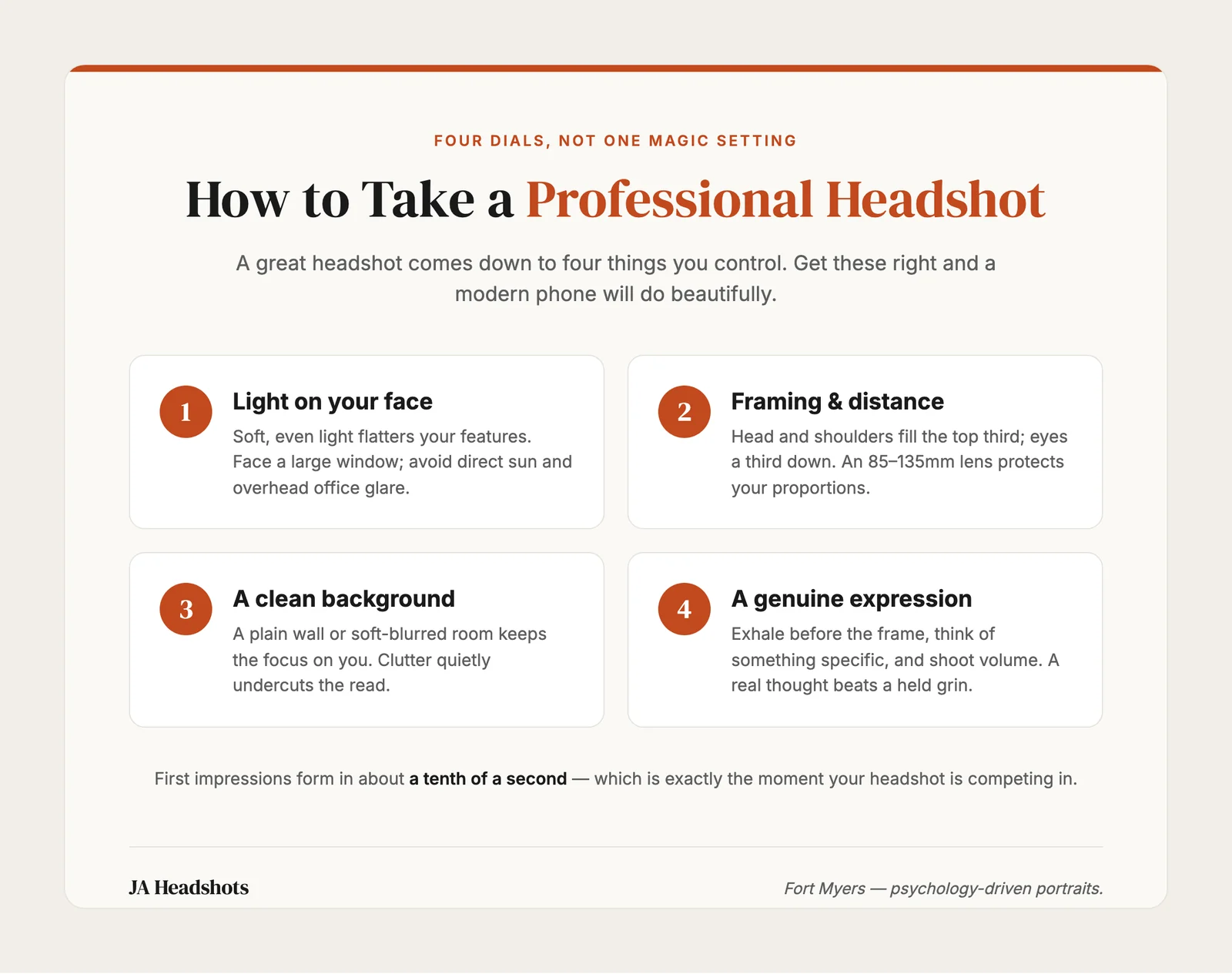
A professional headshot comes down to four things you can control: soft even light on your face, correct head-and-shoulders framing, a clean background, and a genuine expression. Get those right and a modern phone will do beautifully; miss them and no camera will save the shot. If you would rather skip the trial and error, business headshots in Fort Myers at JA Headshots are built for exactly this, and this guide walks the whole process, whether you shoot it yourself or book a session.
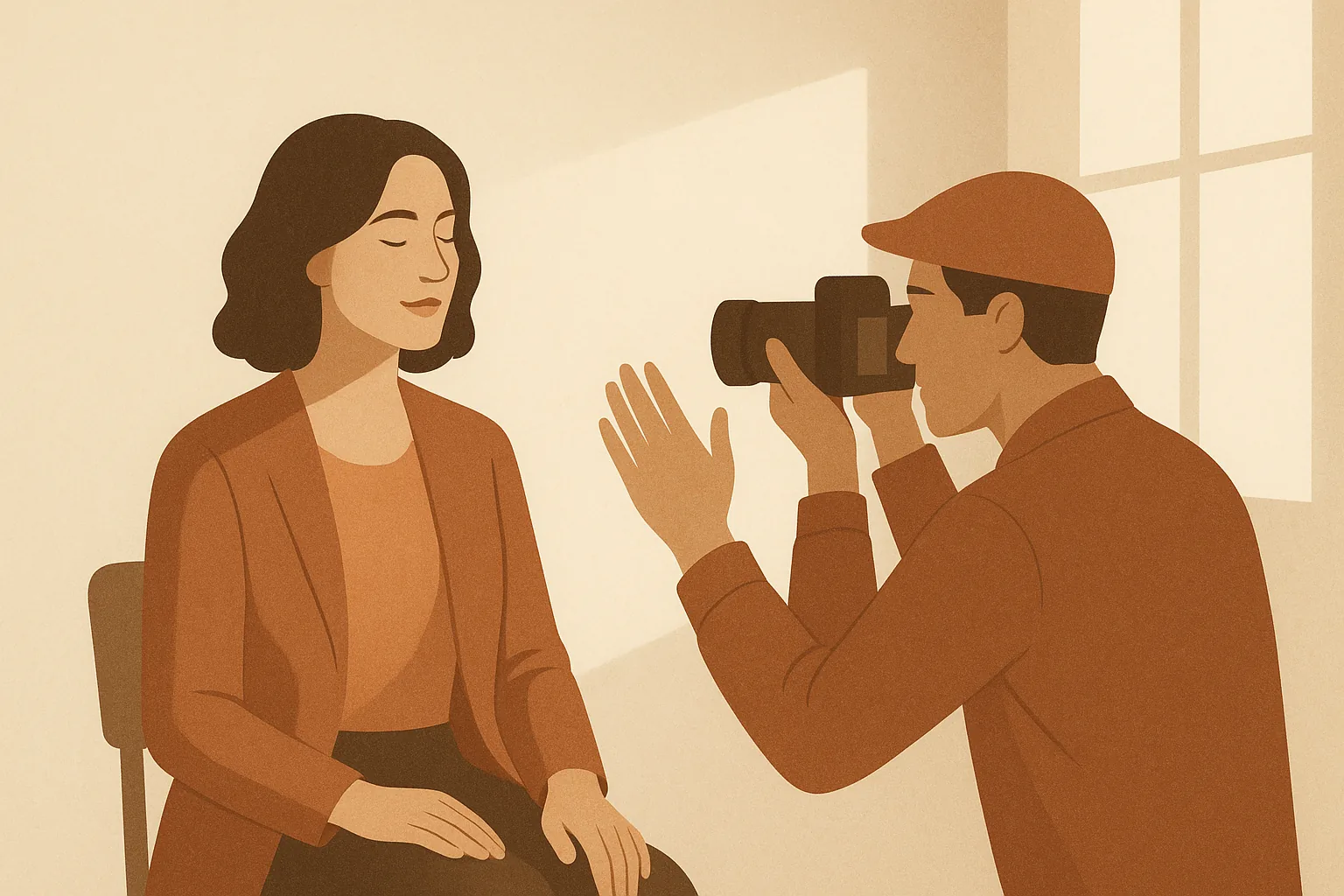
I'm Joshua Albanese, and I've photographed more than 15,000 professionals over 18 years, first at a top-10-rated US headshot studio I founded in Chicago, now in Southwest Florida. The single most common thing I hear is "I'm not photogenic." Almost nobody is right about that. What they're actually missing is a process. Here it is.
What makes a headshot look professional?
A headshot looks professional when the light is soft, the framing is correct, the background is clean, and the expression is genuine. Those four levers decide almost everything, and the camera itself matters least. A good phone in good light beats an expensive camera in bad light every time.
Think of it as four dials, not one magic setting. Most amateur headshots miss on light and expression, not on gear. When people upgrade their camera and still hate the result, it's because they turned the one dial that mattered least.
- Light on your face. Soft, even light flatters your features and softens shadows. Harsh overhead office light and direct sun are the usual culprits behind an unflattering photo.
- Framing. Your head and shoulders fill roughly the top third of the frame, with a little space above your head and your eyes about a third of the way down.
- A clean background. A simple, uncluttered backdrop keeps the focus on you. A busy room or a car headrest quietly undercuts the read.
- A genuine expression. A relaxed, real expression beats a held grin. It's the hardest part to fake and the part most worth slowing down for.
Why the first impression happens faster than you think
People judge a face in a fraction of a second, which is the exact moment your headshot is competing in. In a 2006 study published in Psychological Science, Princeton psychologists Janine Willis and Alexander Todorov found that viewers form impressions of trustworthiness and competence after about a tenth of a second, and longer looks mostly just hardened the snap judgment. Use that as your reason to get light, framing, and expression right rather than leaving them to chance.
Here's the honest part: that research is about faces in general, not a promise that a sharper headshot lifts your reply rate by some specific number. Anyone quoting you a precise figure is guessing. What the science establishes is that the impression forms fast and sticks, which is why the controllable parts are worth the effort.
Getting the light right
Light is the first dial because it does the most work. Soft, directional light gives your skin dimension without carving harsh shadows into your face.
The easiest professional-grade light source is free: a large window on an overcast day. Stand facing it so the light comes toward you, not behind you, and you get a soft, even wash across your face. Direct midday sun and overhead ceiling lights do the opposite, dropping shadows under your eyes and nose.
If you're shooting indoors away from a window, turn off the overhead lights and bring a single soft source to one side, slightly above eye level. One good light beats four bad ones. The goal is gentle falloff across your face, not a flat blast from the front or a hard beam from above.
Framing, lens, and distance
Framing and lens choice are what separate a headshot from a snapshot, and both come down to one idea: distance protects your proportions. Fill the top third of the frame with your head and shoulders, leave a little room above your head, and put your eyes about a third of the way down.
The classic headshot focal length is an 85mm to 135mm equivalent. That range gently compresses your features so your nose doesn't push forward and your face keeps natural proportions. On a phone, use the telephoto lens if you have one, or step back and let the crop do the work. Never shoot a headshot with the camera close to your face. A wide lens up close is why arm's-length selfies distort, and it's the fastest way to look unlike yourself. For a fuller breakdown, our comparison of a professional headshot vs a phone selfie shows exactly what the distance is doing to your face.
Background and wardrobe
A clean background and the right outfit keep every bit of attention on your face, where a headshot is supposed to send it. Both are quiet decisions that either support the photo or slowly undermine it.
For background, simpler is almost always better. A plain wall, a soft out-of-focus room, or a neutral studio backdrop reads professional. A cluttered shelf, a doorway, or a bathroom mirror reads casual no matter how good the rest of the shot is. If your background is busy, step forward and let it blur, or move to the plainest wall in the building.
For wardrobe, solid mid-tone colors in a fit that skims your frame photograph best. Avoid tight patterns that buzz on camera, and skip pure white or pure black, which either blow out or flatten into a silhouette. Necklines that frame the face keep the eye up top. The full list lives in our guide to outfits that photograph well for a headshot, including the fabrics to leave in the closet.
How to relax your expression on purpose
The expression is the dial people skip, and it's the one that decides whether the photo looks like you on a good day or like someone bracing for a shot. A real, relaxed expression comes from a real thought, not from commanding yourself to smile.
The awkwardness most people feel isn't about their face. It's about standing in front of a camera with no idea what to do. That's a process problem, not a personality flaw, and it's fixable.
- Exhale right before the frame. A slow breath out drops your shoulders and softens your jaw. Tension lives in a held breath.
- Think of something specific. Picture a person you like or a small good memory. A real thought produces a real expression; "smile" produces a stiff one.
- Move between frames. Shift your chin, change the smile slightly, look away and back. Small movement kills the frozen look.
- Shoot volume, then choose. Take dozens of frames, not one. Volume is how you beat the stiffness, because a few of those will catch you between poses looking like yourself.
How to take a professional headshot at home, step by step
You can get a genuinely usable professional headshot with a phone and a window. Here's the method in order, pulling together the four dials above.
- Find soft, even light. Face a large window in daylight, light coming toward you. Overcast is ideal. Avoid direct sun and overhead lights.
- Prop the phone at eye level. Don't hold it. Rest it on a shelf or small tripod at roughly eye height, a step back, so the lens doesn't distort your face.
- Use the timer or a helper. A self-timer or burst mode lets your arms and face relax instead of straining for the button.
- Clean up the background. Aim at the simplest wall available. A plain background almost always beats an interesting one.
- Relax your face on purpose. Exhale, drop your shoulders, think of something specific. Take dozens of frames and pick the best later.
That gets most people a solid, honest headshot. The gap that remains is the hard-to-solo part: shaping the light precisely, hitting a natural expression on cue, and being directed out of stiffness while someone watches the frame for you.
DIY versus hiring a professional: which should you choose?
Shoot it yourself when the stakes are low and you have patient time; hire a pro when the photo is doing real work and self-shooting keeps producing results you don't like. Both are legitimate. The choice is about what the photo has to accomplish.
DIY wins on cost and convenience, and for a casual profile or a placeholder it's genuinely enough. A professional session wins when you need consistency across LinkedIn, your company site, and your email signature, or when the recruiter-scan moment matters and you can't afford a stiff, guessed-at frame. A pro controls light, framing, and background so none are left to luck, directs you the whole way, works without a clock, and includes retouching so the final image looks polished without looking edited.
At JA Headshots, our Fort Myers headshot services are built around exactly the friction that makes headshots hard, because most people who say they hate photos just never had someone shape the light and direct the expression for them. Pricing is transparent: a flat $500 session fee plus $150 per fully retouched image you keep, no hidden costs. If you want the LinkedIn-specific version of this, our guide on how to take a good LinkedIn photo covers that platform's framing and expression in detail.
The questions I hear most about taking a professional headshot, answered plainly.
Ready for a headshot that earns trust at a glance?
You don't have to love the camera to end up with a photo that works. If your current headshot is a cropped group shot, a distorted selfie, or nothing at all, book business headshots with JA Headshots in Fort Myers and get a portrait built for the moment someone decides whether to trust you. Sessions are guided start to finish, retouching is included, and there's no clock on your time. Call (239) 401-6999 to book.
This article was written by Joshua Albanese, founder and lead photographer at JA Headshots in Fort Myers. He founded a top-10 US headshot studio in Chicago, photographed more than 15,000 professionals over 18 years, and relocated to Southwest Florida in 2024. His psychology-driven approach is built for people who are convinced they are not photogenic.
Frequently asked questions
How do I take a professional headshot at home?
Stand facing a large window in daylight, prop your phone at eye level a step back, and use the self-timer so your arms and face can relax. Keep the background plain, exhale right before the shot, and take dozens of frames instead of chasing one. A modern phone in soft window light produces a genuinely usable headshot. The remaining gap, shaping light and hitting a natural expression on demand, is what a guided session closes.
What lens or focal length is best for a headshot?
An 85mm to 135mm equivalent lens is the classic headshot range because it compresses features flatteringly and keeps your nose from looking pushed forward. On a phone, that means using the telephoto lens or stepping back and cropping in rather than holding the camera close. Distance is what protects your proportions. A wide lens held near your face distorts, which is exactly why arm's-length selfies rarely read professional.
What should I wear for a professional headshot?
Solid mid-tone colors in a fit that skims your frame photograph best. Skip tight patterns, logos, and bright white or pure black, which either buzz on camera or flatten into a shape. Necklines that frame your face, like a collar or a simple crew, keep the focus up top. If you want the full breakdown, our guide to outfits that photograph well covers the specific combinations and the fabrics to leave home.
How much does a professional headshot cost?
Prices vary widely by market and photographer. At JA Headshots in Fort Myers, pricing is transparent: a flat $500 session fee plus $150 per fully retouched image you choose to keep, with no hidden add-ons. What you are paying for is directed light, unlimited session time, and professional retouching, the three things hardest to replicate alone. Studios that quote a rock-bottom flat rate usually make it back on rushed sessions and per-file upsells.
Do I really need a professional photographer for a headshot?
Not strictly. A phone in good light and a patient afternoon can get most people a solid result. A photographer earns the fee when the photo is doing real work for your career and self-shooting keeps producing images you do not like. A pro controls the light, frames it correctly, and directs you out of stiffness in real time, which is the whole difference for people who dislike being photographed.
Business headshots in Fort Myers, built for the moment someone decides whether to trust you. Guided, retouched, no clock.
Learn more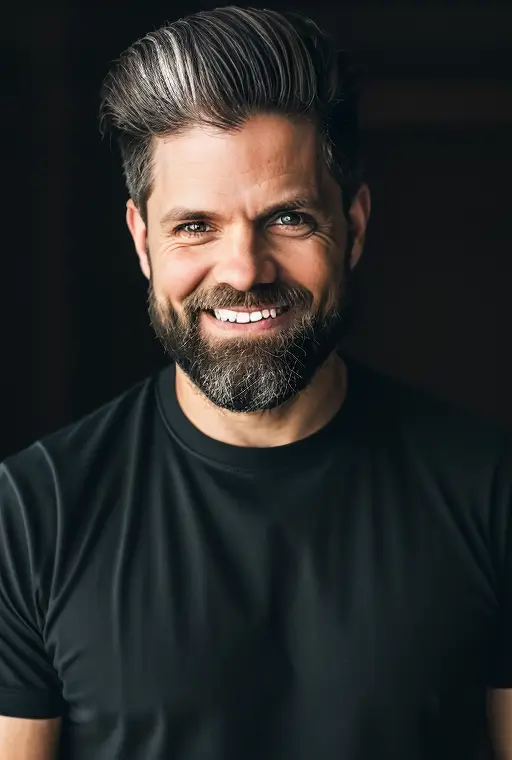
Written by
Joshua Albanese
Photographer, JA Headshots
Joshua Albanese founded one of the top-10 rated headshot studios in the United States in Chicago in 2007. Over 18 years he photographed more than 15,000 professionals and produced over 3 million images for clients ranging from Fortune 500 executives to first-year associates. In 2024 he relocated to Fort Myers and opened a dedicated portrait studio at 1325 Canterbury Dr. His psychology-driven approach is built for people who say they aren't photogenic.