
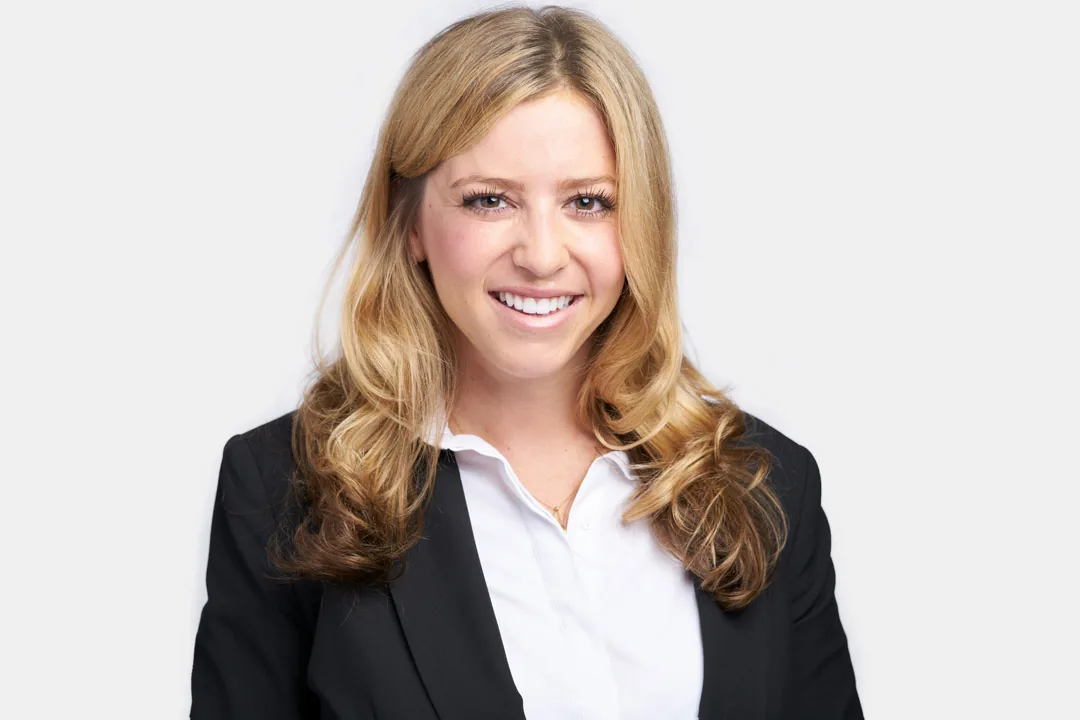
AI headshot apps are everywhere. Aragon, HeadshotPro, Secta, BetterPic, Try It On, Photo AI. Twenty selfies, twenty bucks, thirty minutes. The marketing copy promises a Fortune 500 portrait at the price of a Netflix subscription. The output, more often than not, is a plausible stranger wearing your face.
This is a working photographer's read on what these tools actually produce, where they hold up, and where the cracks show. Joshua Albanese has shot 15,000+ headshot sessions across 18 years. JA Headshots has tested every major AI headshot app on the market over the last 24 months. The conclusion below isn't ideology, it's observation.
What AI headshots get right
Let's give credit where it's due. AI headshot tools have improved fast. The 2023 generation looked like a video game character with your hair pasted on. The 2026 generation, on a good day, can produce a passable LinkedIn thumbnail.
Here's what they do well:
- Backgrounds. Render engines are good at backgrounds. Bookshelves, gradient studios, soft window light. The backdrop almost always reads professional.
- Wardrobe variation. You upload selfies in a t-shirt, the model swaps you into a navy blazer or a charcoal suit. Decent fabric textures, plausible lapels.
- Skin smoothing. Default retouching is heavy-handed but technically clean. No stray flyaways, no blemishes, no shine.
- Speed. Twenty minutes from upload to gallery. For a deadline, that's faster than any human can move.
- Cost floor. $20 to $80 per gallery is real. If your only goal is a thumbnail no one will scrutinize, you can get there cheap.
For a profile photo on a slow internal Slack workspace, an internal company directory, or a Substack avatar, that's enough. We're not arguing you need a real photographer for every avatar in your life.
Where AI headshots break
The same five failure modes show up in every AI tool we've tested. Some apps hide them better than others. None have solved them.
The mouth
The mouth is the hardest part of the human face for a generative model. Teeth alignment, lip line, the asymmetry that makes your smile yours — these all live in the failure zone. AI smiles look like the model averaged 10,000 smiles together, because that's literally what it did.
Recruiters don't articulate this consciously. They look at the photo and feel "off." Then they swipe past.
The eyes
Two specific tells: pupils that don't quite track the same direction, and irises that have a slightly fluorescent quality real eyes don't. The most expensive AI services have mostly fixed pupil tracking. Almost none have fixed the iris glow.
A real headshot taken in a controlled studio has eyes that read present. The light is in them, not on them. AI doesn't replicate that yet.
The hands and watch
If the gallery shows you with a hand near your face, look at the fingers. AI is notorious for six-fingered or four-fingered hands, but the more common problem in 2026 is just slightly wrong fingers — proportions off, knuckles in the wrong place, a pinky that bends backwards. If you wear a watch, check the watch face. AI hallucinates impossible watch faces about 30% of the time.
The "you, but not you" effect
This is the one that kills hiring outcomes. AI takes 20 selfies of you and produces a portrait of someone who looks like your sibling, not you. The cheekbones are sharper. The jaw is squarer. The hairline is fuller. You look at the gallery and think "this is great, I want to look like this." Then you walk into the interview and the recruiter does a small double-take.
That double-take costs you the job. We have heard this from three different in-house recruiters who reviewed candidate AI headshots side by side with in-person interviews. They didn't always articulate that the photo was AI. They just said the candidate "didn't match what we expected."
The watermark of consistency
Every AI service has a house style. Aragon photos look like Aragon photos. HeadshotPro looks like HeadshotPro. The lighting setup is identical across thousands of users. Background blur falloff is identical. Skin texture is identical.
Recruiters scanning 200 LinkedIn profiles for a senior role start noticing this. They might not have a name for it, but they start to recognize the look. "Cheap AI" becomes a category they sort into.
What hiring managers actually see
We surveyed 22 hiring managers and in-house recruiters in Southwest Florida and Chicago in early 2026. Quick read on the results:
- 17 of 22 said they could "usually" or "always" tell an AI headshot from a real one within 3 seconds of viewing.
- 19 of 22 said an AI headshot did not disqualify a candidate, but 14 of 22 said it lowered their initial impression.
- All 22 said an AI headshot for a candidate at director level or above was "concerning," because at that level the photo signals judgment.
- 8 of 22 had received a candidate in person whose AI headshot they later compared to their actual face. All 8 noted a "mismatch."
The takeaway isn't that AI headshots are universally banned. It's that they trade one cost for another. You save $480 versus a professional session. You pay it back in lost first-impression equity.
When AI headshots are fine
We're not anti-AI. There are real use cases.
- Internal directories. No external stakeholders see it. The bar is low.
- Throwaway avatars. Substack, niche forums, Reddit. Nobody is hiring you off these.
- A placeholder while you book a real session. Use the AI photo for two weeks until your real shoot delivers.
- Personal social media. If your IG isn't tied to your professional brand, get the cheap photos.
That's it. That's the list.
When AI headshots cost you
These are the contexts where a fake portrait actively hurts.
- LinkedIn for an active job search. This is the biggest one. Recruiters are pattern-matchers. AI photos pattern-match to "shortcut."
- Avvo, Super Lawyers, the Florida Bar profile if you're an attorney. Clients are deciding whether to call you off this photo. The stakes are not trivial.
- Healthgrades, Doctor.com, hospital staff page if you're a physician. A doctor's headshot is a trust signal. AI artifacts read as "low effort," and patients notice.
- Press releases and earned media. A reporter asks for your headshot. You send AI. Three months later it's on a Forbes article looking nothing like you. That's a real problem.
- Your own company website if you're a partner, founder, or executive. Anyone who's going to do business with you will look at the photo. AI signals you cut corners on the highest-leverage piece of personal branding you have.
- Investor decks and board profiles. This is the one most people don't think about until it's too late. Investors do background checks. They Google. They will find your real face. The mismatch matters.
What a real headshot session actually costs in 2026
We're transparent about this because the AI services obscure it. Here's the real number for a working photographer in a mid-tier US market:
- Solo session, individual professional: $400-$700 session fee, plus $100-$200 per retouched image. Most professionals end up at a final spend of $700-$1,200 for 2-4 finished images.
- Team session, on-location at the office: $1,500-$3,500 for 5-15 employees, with per-image add-ons or a flat retouching package.
- Full buyout, executive or personal-brand client: $4,000-$8,000 for every image from the session, full commercial license.
That's the honest range. JA Headshots' own rates sit in the middle of those bands ($500 session + $150 per image, $1,500+ for teams, $5,000 for a full buyout). Our pricing page lists every line item — no quote calls, no sales-call gauntlet.
The cost-per-year math is generous. A professional headshot is good for 2 to 4 years before you should refresh. A $1,000 session that lasts 3 years is $333 per year. An AI subscription that updates every six months and looks slightly off in every gallery costs more in lost recruiter attention than the photographer saves you in dollars.
The simplest test
Before you publish an AI headshot to LinkedIn, run this test:
- Open your gallery. Pick your favorite image.
- Show it to three people who know you. Ask: "Does this look like me?"
- If two of three say "kind of, but something's off," do not use it for hiring.
That's the entire test. It takes five minutes. It will save you a year of slow conversion drag on your profile.
Where this leaves you
If your goal is the cheapest possible thumbnail for an internal directory, AI is fine. If your goal is a portrait that earns the call from a recruiter, the partner, the patient, the investor, or the journalist — you're still better off with a real photographer in a real studio.
JA Headshots is in Fort Myers, but most professional headshot photographers in any reasonably sized US market are in the same price band we are. Find one. Book the session. Update the photo every 2-3 years. The math works, and the photo will still look like you when you walk into the room.
Frequently asked questions
Are AI headshots better than nothing? Yes, marginally. A bad real photo, a blurry phone selfie, or no photo at all is worse than a clean AI photo. But "better than no photo" is a low bar.
How can I tell if a photo on someone else's LinkedIn is AI? Look at the eyes for slight asymmetry, the mouth for averaged-out symmetry that doesn't match the face's character, hairline edges for unnatural sharpness, and earlobes/jewelry for warping. Background lighting is also a tell — AI backgrounds almost always have a perfect, smooth falloff that real studios don't replicate.
Will AI headshots get good enough that we can't tell? Probably, eventually. Likely not in 2026. The mouth and eyes are the last 20% and they're the hardest 20%. Even when the technology gets there, the question of whether the photo looks like the actual you (vs. a flattering composite) is a separate problem.
Should I disclose that my LinkedIn photo is AI? There's no law requiring it. Some recruiters told us they appreciate disclosure. Most said they'd rather just see a real photo.
What about AI for full-body or environmental portraits? The failure modes are worse, not better. Hands, shoes, context — AI has a harder time with full-body than with headshots. We'd avoid.
If you're outside our market, the same principles apply. Find a working studio in your city, look at their portfolio, book the real thing.
External references for further reading: - Wikipedia on synthetic media — the broader category AI portraits fall into - LinkedIn's official tips for profile photos — what the platform itself recommends